Read more about the article 61 • Cutting Corners
Cutting Corners

61 • Cutting Corners

Cutting Corners means skipping important work to save money today, only to spend considerably more time fixing the consequences tomorrow. In UX, research or testing phases are abbreviated, omitted or postponed. Under pressure, these shortcuts feel rational because the product ships faster. But this practice usually backfires because the problems simply arrive later. You end up building a product that users don't want, leading to higher cost, extra fixes, and lost revenue.

Continue Reading61 • Cutting Corners
Read more about the article 60 • Smoke and Mirrors
Smoke and Mirrors

60 • Smoke and Mirrors

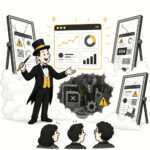
Smoke and Mirrors describes deceptive, misleading, or heavily embellished information used to disguise an unpleasant truth or make something appear better than it is. In UX design, smoke and mirrors refers to design illusions such as high-fidelity prototypes or deceptive micro-interactions that make a product feel highly functional, responsive, or simple on the surface while masking deep back-end complexity or missing features.

Continue Reading60 • Smoke and Mirrors
Read more about the article 59 • Hawthorne Effect
Hawthorne Effect

59 • Hawthorne Effect

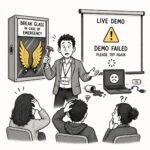
The Hawthorne Effect is a type of behavioral reactivity in which individuals change their behavior simply because they know they are being observed. In UX research, this creates a subtle but powerful distortion: the moment a session begins, the behavior you are trying to study is no longer entirely natural. Participants become more attentive, more deliberate, and often more careful than they would be in their everyday interactions. As a result, what looks like a smooth and successful experience in testing can quietly mask the friction and confusion that exist in the real world.

Continue Reading59 • Hawthorne Effect
Read more about the article 58 • Bells and Whistles
Bells and Whistles

58 • Bells and Whistles

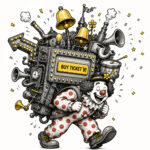
Bells and whistles are non-essential, flashy features or embellishments that enhance a product's appeal but are not required for core functionality. While sometimes adding delight or immersion, they often risk obscuring core user needs, leading to increased complexity, cognitive load, and reduced usability. In UX design, bells and whistles may refer to elaborate animations, unnecessary 3D effects, or complex customization options that make the interface sparkle, the interactions feel fancy, and the feature list sounds exciting - but do little to enhance the core experience.

Continue Reading58 • Bells and Whistles
Read more about the article 57 • Winging It
Winging It

57 • Winging It

Winging It refers to improvising or operating without a formalized, structured plan, often creating design solutions or research approaches "on the fly". As a strategy, it is generally considered unprofessional and risky in a professional UX context, as you should always follow a defined, strategic process. As a situation, winging it is almost inevitable. UX consultants cannot control all aspects of their work and winging it is therefore a key skill in their toolbox of techniques to turn awkward situations into research gold.

Continue Reading57 • Winging It
Read more about the article 56 • Vibe Coding
Vibe Coding

56 • Vibe Coding

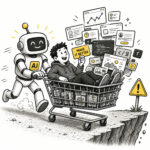
Vibe Coding is a software development practice assisted by artificial intelligence (AI) where the developer describes the outcome through natural-language prompts, trusting that the system will figure out the rest. Instead of carefully designing solutions, you prompt, generate, test, tweak, and repeat. The software begins to take shape quickly, features appear almost instantly, and progress feels effortless. It's tempting to rely on results and follow-up prompts to guide changes whilst accepting AI-generated code without thorough review.

Continue Reading56 • Vibe Coding
Read more about the article 55 • Throwing Spaghetti at the Wall
Throwing Spaghetti at the Wall

55 • Throwing Spaghetti at the Wall

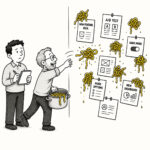
Throwing spaghetti at the wall to see what sticks is a common English idiom that refers to haphazardly testing multiple random ideas, strategies, or creative solutions to see which one yields results. In UX and product development, the pattern appears when experimentation loses its connection to a clear problem, hypothesis, or strategy. Instead of deciding what we need to learn and designing an experiment around it, we simply try things.

Continue Reading55 • Throwing Spaghetti at the Wall
Read more about the article 53 • Boilerplate
Boilerplate

53 • Boilerplate

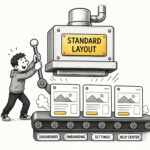
The term boilerplate refers to a standard, reusable piece of content used in various types of content, including articles, communication materials such as press releases, and contracts. It serves as a template for specific types of content, allowing consistency and efficiency in writing and communication. In design, boilerplate elements include UI components, layout templates, or design systems to speed up the product development process. These pre-built kits aim to ensure consistency, reduce errors, and allow designers to focus on unique user needs rather than rebuilding basic elements.

Continue Reading53 • Boilerplate
Read more about the article 48 • Hofstadter’s Law
Hofstadter’s Law

48 • Hofstadter’s Law

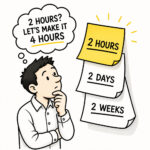
Hofstadter’s Law is a phenomenon which states that “It always takes longer than you expect, even when you account for Hofstadter’s Law.” It describes the widely experienced difficulty of accurately estimating the time it will take to complete tasks of substantial complexity. The fact that it references itself signals that it takes longer even though we are aware and expect that it will take longer. In product design, the law highlights a recurring failure in estimating time for complex tasks - especially those involving creativity, uncertainty, and iteration.

Continue Reading48 • Hofstadter’s Law
Read more about the article 46 • Streisand Effect
Streisand Effect

46 • Streisand Effect

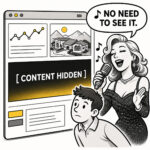
The Streisand effect is a phenomenon where attempts to suppress or hide information inadvertently cause it to spread more widely, often creating the opposite of the intended effect. In UI design, attempts to obscure, bury, or quietly remove something often do the opposite - they draw attention to it. What users might never have noticed suddenly becomes the thing they focus on.

Continue Reading46 • Streisand Effect