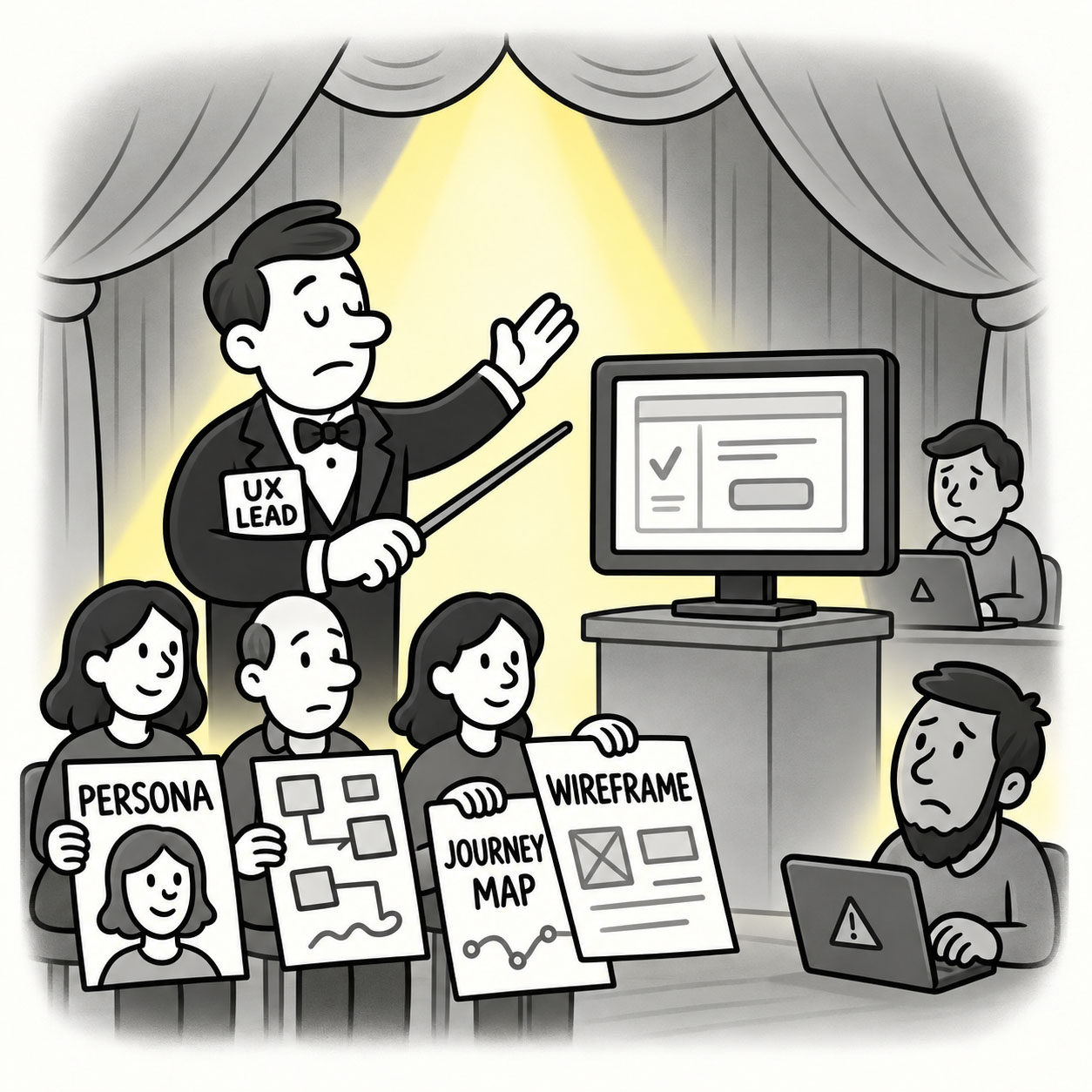
UX Theater is when a team goes through the motions of doing user experience work, but without improving the experience. It’s the performance of design thinking: sticky notes, empathy maps, and user personas that look great in a presentation, but have little to no impact on the final product. It’s like hosting a cooking show and never actually serving a meal.
ORIGIN
The phrase borrows from “security theater” in cybersecurity, a set of actions meant to make people feel safer without improving safety. UX Theater uses the same sleight of hand: by showcasing process artifacts (user journey maps, big usability test reports) without integrating their findings, teams create the illusion of user-centered design while quietly ignoring the messy reality of user needs.
WHEN
You’re probably watching, or starring in, a UX Theater if:
- Every project starts with a design sprint… that doesn’t change the roadmap.
- User research results are presented, applauded, and promptly archived.
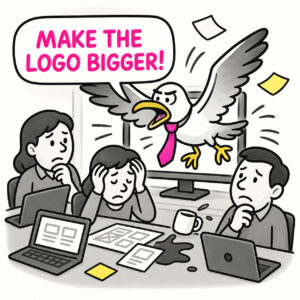
- The final design decisions are made entirely by stakeholders, not users.
- The “prototype” is just a lightly redesigned version of the old thing.
WHY
UX Theater happens because:
- Teams want the credibility of “doing UX” without slowing down delivery.
- Stakeholders want validation, not discovery.
- Research is seen as a checkbox, not a driver of change.
- It’s easier to produce pretty artifacts than to challenge assumptions.
HOW
To avoid putting on a UX show:
- Tie outputs to outcomes. Every artifact should have a clear path to influencing design decisions.
- Measure change. Show how research or testing improved a measurable metric.
- Invite skeptics. Let stakeholders see the raw user struggles, not just the polished slides.
- Ship user impact, not just deliverables.
PRO TIP
If the UX process feels like a stage production, ask: Who is the audience, and what’s the plot? If the answer isn’t “the users, and their needs,” you might be in a dress rehearsal for nothing.
EXAMPLES
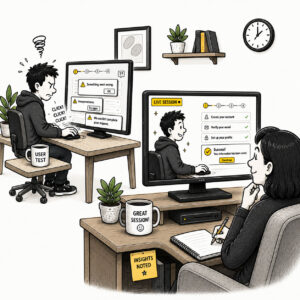
- Conducting “usability tests” where users are told exactly how to use the feature.
- Personas laminated and framed in the office, never referenced in a design review.
- Producing beautiful journey maps that end up buried in a SharePoint folder.
CONCLUSION
UX Theater looks convincing from the outside. The danger is that it convinces you, too.
Also known as: Research kabuki • Design pantomime • Empathy cosplay