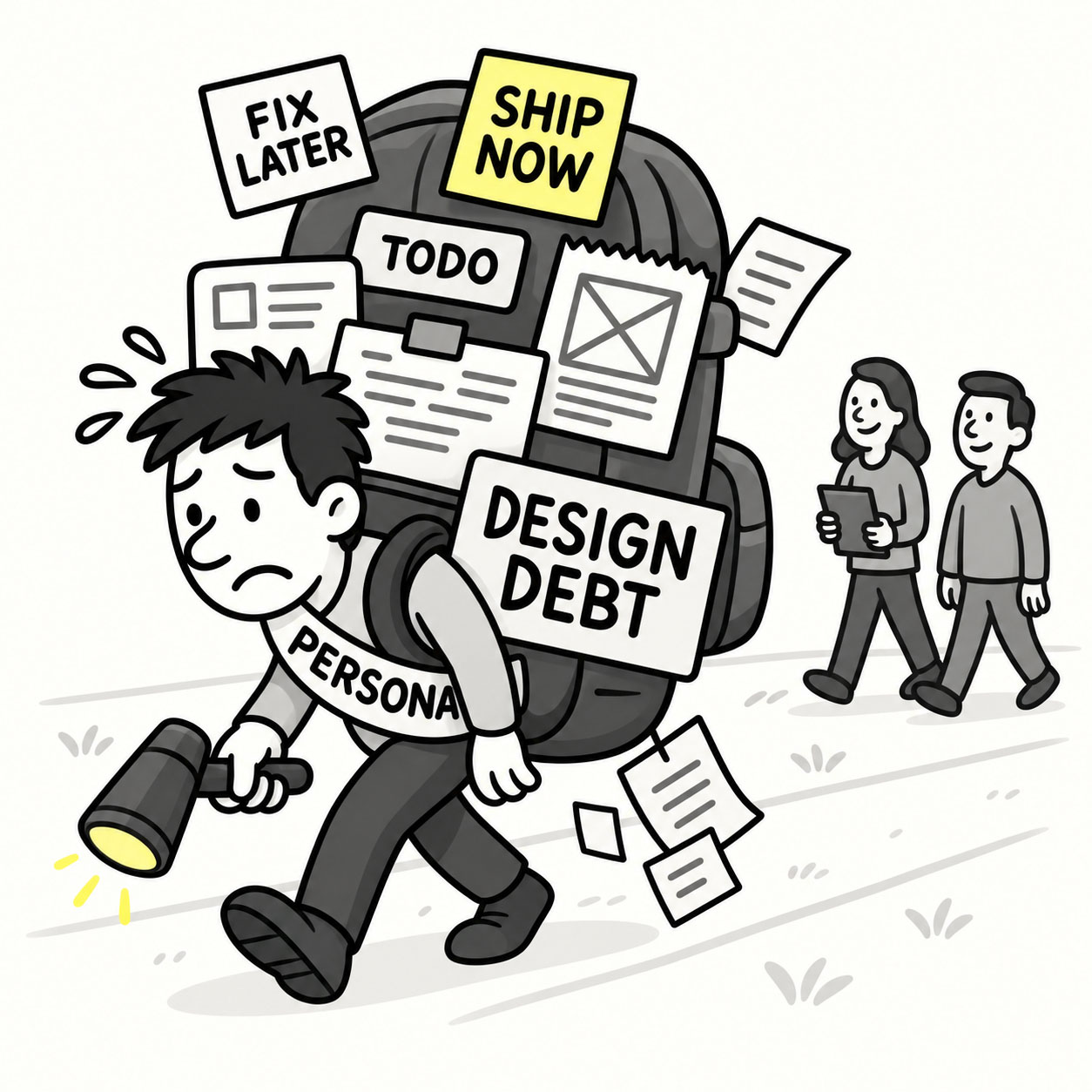
Design debt is the accumulation of shortcuts, inconsistencies, and outdated patterns in a product’s user experience over time. Like financial debt, it lets you move faster in the short term, but if left unpaid, it compounds into a bigger, messier problem that slows you down and frustrates users.
ORIGIN
The concept is borrowed from technical debt, a term coined by Ward Cunningham in the 1990s to describe the cost of quick-and-dirty coding choices.
In UX, design debt refers to the “interest” you pay when you cut corners on design, skip documentation, or ignore consistency for the sake of speed. Every rushed release, every misaligned button, every undocumented pattern adds to the pile.
WHEN
You’ll see design debt building up when:
- Screens and workflows feel inconsistent from one part of the product to another.
- Multiple versions of similar components (buttons, modals, menus) coexist.
- New features bolt onto old flows without regard for the bigger picture.
- The team spends more time patching and maintaining than innovating.
- Usability complaints about “clunky” or “confusing” UX keep surfacing.
It’s particularly common in fast-moving startups, long-lived enterprise products, or any team shipping under constant pressure.
WHY
Design debt happens because:
- Speed is prioritized over quality to meet deadlines.
- Design decisions aren’t documented or standardized.
- Teams work in silos without a shared vision or system.
- Legacy code or constraints make proper fixes hard to justify in the moment.
The debt keeps growing until it slows everyone down, just when you need to move fast again.
HOW
Here’s how to manage and pay down design debt:
- Audit regularly. Inventory inconsistencies and outdated patterns.
- Use a design system. A shared library of components helps enforce consistency.
- Log the debt. Keep a visible backlog of UX issues so they don’t get forgotten.
- Prioritize strategically. Tackle the most painful or high-impact debt first.
- Build it into planning. Allocate time each sprint for cleanup alongside new work.
PRO TIP
Don’t aim for zero debt, some debt is inevitable. The key is to keep it manageable, like a low-interest mortgage instead of a stack of maxed-out credit cards.
EXAMPLES
- Three different button styles scattered throughout an app.
- Legacy flows that take users out of the modern, redesigned experience.
- New features that break the mental model of how things “should” work.
CONCLUSION
Design debt reminds us that design is a system, not just a series of screens. Pay down the debt, and your product, and your team, will move faster, with less friction and happier users.
Also known as: UX debt • Interaction debt • Inconsistency tax