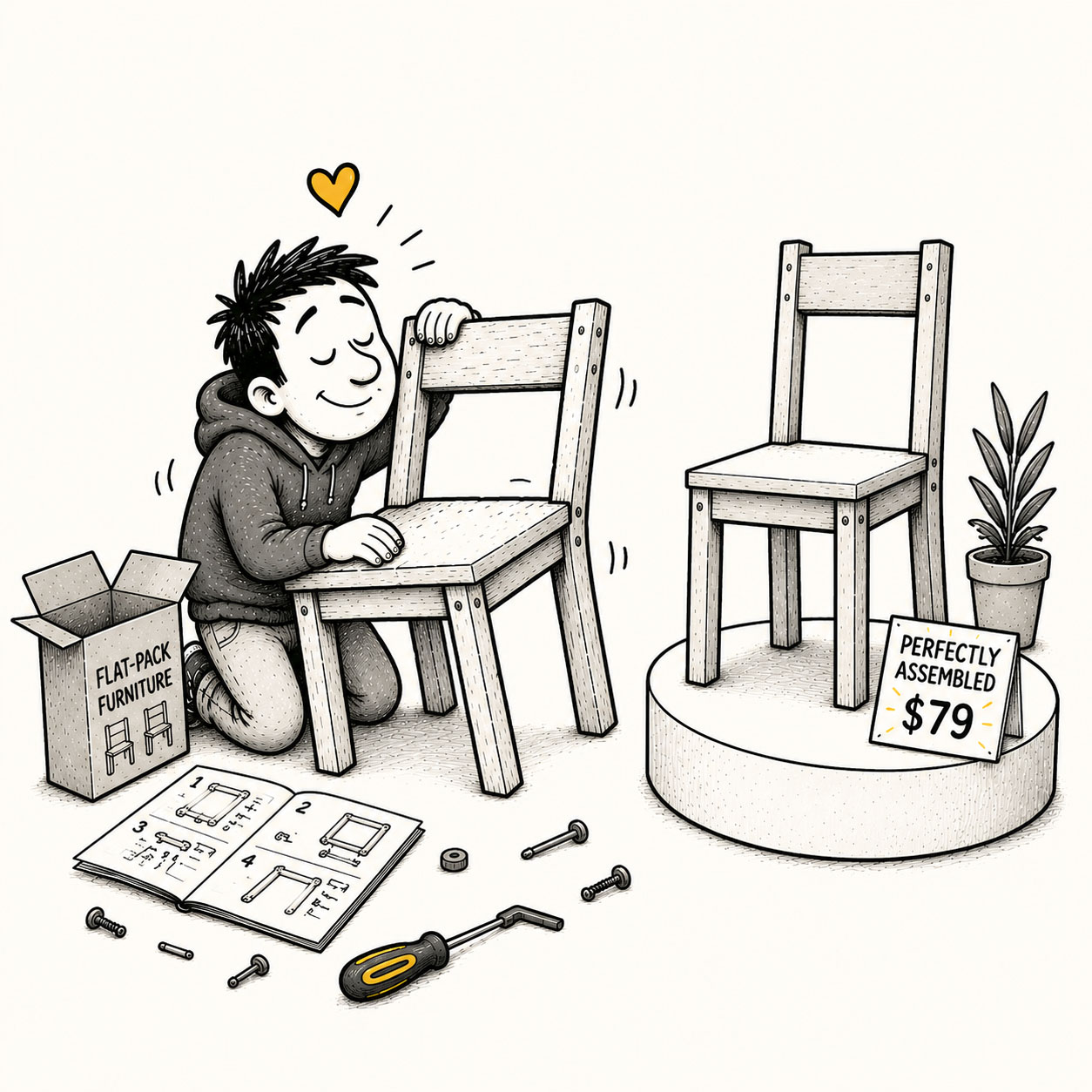
The IKEA Effect is a psychological phenomenon where users love a product more because they helped build it. When users invest time and effort to set things up, they feel proud of the outcome which can significantly influence a product’s perceived value and subsequent customer behavior with it.
In UX design, this effect can be used to boost brand loyalty and engagement. Users love the solution – not because it’s better – but because it feels personal and earned.
ORIGIN
The IKEA Effect is a cognitive bias first described by behavioral economists Michael I. Norton et al in their 2011 study The IKEA Effect: When Labor Leads to Love. They found that people consistently assigned higher value to products they had partially assembled themselves than to identical products assembled by someone else – even when the end result wasn’t objectively better.
The phenomenon takes its name from IKEA, whose flat-pack furniture requires customers to complete the final step of the manufacturing process. That small investment of effort creates a sense of accomplishment, competence, and ownership, making the finished product feel more valuable than an equivalent piece purchased fully assembled. Importantly, researchers also found that the effect depends on successful completion. If the task becomes too difficult or ends in failure, the emotional attachment quickly disappears.
Today, the IKEA Effect extends well beyond furniture. In UX and product design, it explains why users become more attached to products they personalize, configure, or help create. It also explains why designers and stakeholders often become overly attached to features they spent months building.
WHEN
You’ve encountered the IKEA Effect when:
- Teams defend their own ideas more strongly
Even when better alternatives exist.
- Designs feel “obviously right” to the creators
But confusing to everyone else.
- Stakeholder-built features get prioritized
Because of ownership, not impact.
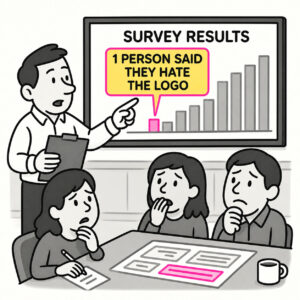
- Internal alignment is high, external validation is low
Everyone agrees – except users.
- You hear: “But we worked so hard on this”
As a reason to keep something.
WHY
The IKEA Effect is driven by ownership. As a result, ideas are often evaluated less by how well they work but by who built them and how much energy was spent. This presents us with somewhat of a double-edged sword: Users value products more because they helped build them and teams value products more because they built them. Neither necessarily result in a better product. Let’s first understand some of the reasons why it happens:
- Effort justification
Time and energy invested increase perceived value.
- Sense of accomplishment
Successfully completing a task creates pride and competence, which transfers to the product itself.
- Emotional attachment
People naturally bond with things they help create.
- Perceived ownership
Customization and contribution transform users from consumers into co-creators, strengthening engagement and loyalty.
- Creator bias
Teams evaluate their own work through the lens of effort rather than impact.
HOW
In product design, it’s not necessary to eliminate the IKEA effect, just use it carefully and intentionally. Here are some pointers to be aware of:
- Invite participation but don’t overdue it
Allow users to personalize, configure, or build parts of their experience. Small investments often create stronger emotional ownership than passive consumption.
- Keep effort manageable
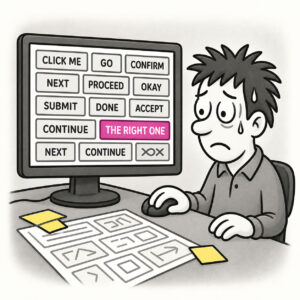
The task should feel achievable. Too much friction destroys the effect instead of strengthening it.
- Separate ownership from evaluation
The people who create a solution shouldn’t be the only people deciding whether it succeeds.
- Validate with users
As with any product design, user research – not pride – should guide decisions.
- Celebrate iteration, not attachment
The goal is to build better products, not defend previous work.
PRO TIP
Design products users can fall in love with. Use the IKEA effect to strengthen the bond between the user and your product. But on the flipside, always check your team’s emotional bond with the product to ensure they haven’t fallen trap to the IKEA effect for themselves.
EXAMPLES
- A dashboard lets users choose, arrange, and configure their own widgets. After investing time creating “their” dashboard, they’re more reluctant to switch to another product.
- A fitness app asks users to build a personal training plan instead of simply assigning one. The resulting plan feels more valuable because they helped create it.
- An onboarding flow asks users to select interests and preferences to personalize their experience. That small investment creates an early sense of ownership.
- A product team spends six months building a complex feature and continues defending it despite poor adoption. They value the feature partly because of what it cost them to create.
- A designer resists simplifying an elaborate workflow because “we put so much thought into this.” Users, who contributed none of that thought, remain considerably less impressed.
- A workshop produces a solution collaboratively, and participants become more enthusiastic about implementing it because they helped create it rather than having it presented to them.
CONCLUSION
The IKEA Effect reminds us that effort has a remarkable ability to change perception. A little work can transform a product from something people simply use into something they genuinely care about. Used intentionally, this creates stronger engagement, greater loyalty, and a deeper sense of ownership.
But the same psychology applies to product teams. The more effort invested in a feature, interface, or workflow, the harder it becomes to judge it objectively. The challenge is knowing when to encourage attachment and when to question it. The best products inspire users to love what they’ve helped create, while giving their creators the courage to let go of what no longer works.