Read more about the article 44 • Red Herring
Red Herring

44 • Red Herring

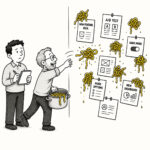
A Red Herring is a misleading or distracting element that pulls attention away from what actually matters. In UX, it can be accidental such as a design element that looks like it does the thing but doesn’t, something that distracts users from their primary goal or leads them toward the wrong conclusion. But it can also be intentional, such as a deliberate distraction used to test attention or a research question to validate that users don't rush through the study.

Continue Reading44 • Red Herring
Read more about the article 43 • Breadcrumbs
Breadcrumbs

43 • Breadcrumbs

Breadcrumbs help users understand where they are, how they got there, and how to get back - without feeling lost in the woods. In UX, breadcrumbs provide a clear trail through complex structures such as websites, apps, and map interfaces. They are a simple but powerful navigational aid that supports orientation, hierarchy, and confidence.

Continue Reading43 • Breadcrumbs
Read more about the article 42 • Murphy’s Law
Murphy's Law

42 • Murphy’s Law

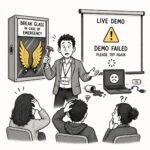
Murphy's law is an epigram that is typically stated as: "Anything that can go wrong will go wrong." In UX and product design, Murphy's Law captures the grim inevitability that if there's a way for something to fail - no matter how unlikely - it eventually will. A feature will break at the worst possible moment. A user will try the one interaction no one tested. A stakeholder's favorite edge case turns out to be a real-world requirement. Murphy's Law isn't pessimism - it's about preparation.

Continue Reading42 • Murphy’s Law
Read more about the article 41 • Kitchen Sink
Kitchen Sink

41 • Kitchen Sink

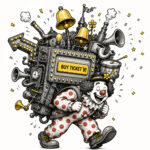
The Kitchen Sink is what happens when an app - or a map - tries to show everything and ends up explaining nothing. At first glance, it looks impressive. Packed. Comprehensive. Full of features, layers, and information. But spend more than a few seconds with it, and the experience quickly shifts from insight to overload. The eye jumps. The interface competes for attention. The meaning gets buried somewhere between panels, controls, and colors. The Kitchen Sink is not a failure of effort. It is a failure of prioritization.

Continue Reading41 • Kitchen Sink
Read more about the article 37 • Cobra Effect
Cobra Effect

37 • Cobra Effect

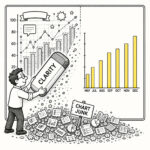
The Cobra Effect describes situations where the metric improves but the experience does not. Nascent product teams often craft incentives with the noblest of intentions: faster growth, happier users, quarterly bonuses; yet sometimes the universe responds not with improvement but with a sharp increase in the very problem they hoped to solve.

Continue Reading37 • Cobra Effect