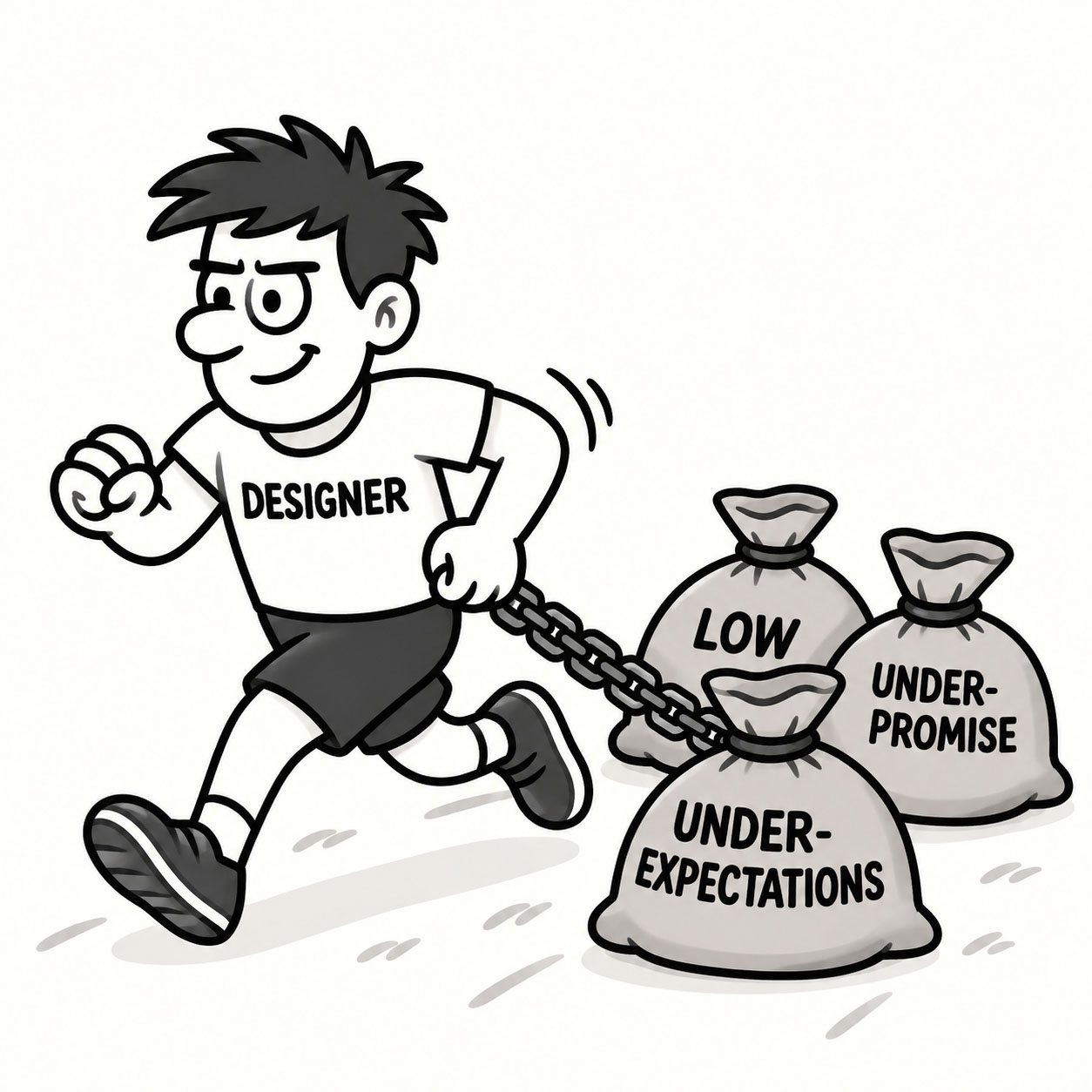
Sandbagging describes the practice of deliberately lowering expectations or under-promising on what a design, feature, or team can deliver, only to exceed those expectations later. It’s a strategy used to create the perception of overperformance, often to impress stakeholders, reduce risk, or buy time.
ORIGIN
The term comes from gambling, where a player might pretend to have a weak hand to lull opponents into a false sense of security before revealing their strength. In business and product contexts, “sandbagging” refers to intentionally setting a lower bar than one can reach, like holding a little back in reserve.
In UX, it’s often seen when teams frame designs, metrics, or timelines as more limited than they really are, so that delivering just a little more appears impressive.
WHEN
You’re most likely to encounter sandbagging when:
- Teams are under pressure to deliver results but want to protect themselves from overcommitment.
- Designers or PMs lack confidence that stakeholders understand the risks involved.
- Teams have been burned in the past by unrealistic expectations or scope creep.
- A team wants to “wow” stakeholders with results that feel better than promised.
It’s particularly common in high-stakes projects, quarterly goal setting, and pitches for design improvements.
WHY
Sandbagging can feel like a way to manage risk and control perception. In environments where teams are punished for missing ambitious goals but rewarded for exceeding modest ones, sandbagging becomes a survival tactic. However, it can also undermine trust if stakeholders feel misled or if opportunities for greater impact are left on the table.
HOW
Here’s how to spot and address sandbagging (or use it judiciously):
- Be realistic. Set goals and timelines that account for known risks without being unnecessarily pessimistic.
- Clarify trade-offs. Explain what’s possible in each timeframe at different levels of quality or scope.
- Align on outcomes. Focus on the user and business impact you’re aiming for, not just exceeding low expectations.
- Avoid habit-forming. Sandbagging as a habit can breed complacency or erode ambition. Use it sparingly, not as a default strategy.
- Communicate honestly. If you’re intentionally building in buffer, be transparent with your team if not stakeholders.
PRO TIP
When sandbagging, make sure the “extra” you hold back is meaningful, not just fluff. Exceeding expectations works best when it delivers real value to users or the business, not just cosmetic wins.
EXAMPLES
- A designer estimates a redesign will take four weeks even though they’re confident it can be done in two, so stakeholders are impressed when it’s delivered early.
- A UX team presents a modest usability improvement in a roadmap, then rolls out an even better version later as a “bonus.”
- A PM downplays a feature’s expected impact in planning meetings to reduce scrutiny, then highlights its strong performance at launch.
CONCLUSION
Sandbagging reminds us that managing expectations is a key part of product and UX work, but it works best when balanced with ambition, honesty, and a clear focus on real outcomes.
Also known as: Under-promising and over-delivering • Playing it safe • Strategic pessimism