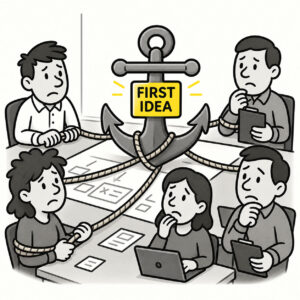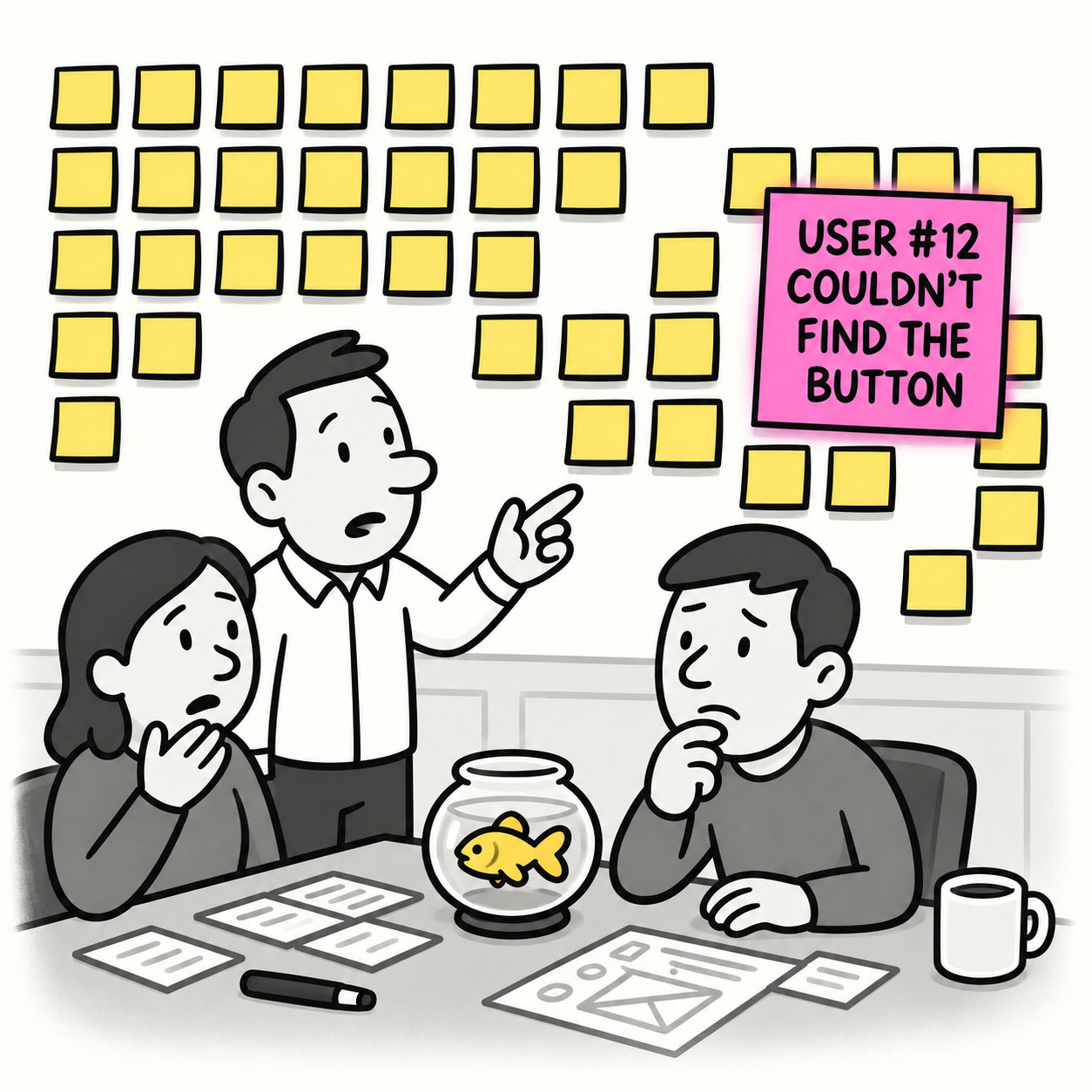
Recency bias is the tendency for people to weigh the most recent information or experience more heavily than earlier ones, sometimes even disproportionately. In UX, it means users’ judgments and memories of your product are often dominated by what happened last, not by the full journey.
ORIGIN
Recency bias is also part of the serial-position effect, a psychological principle identified by Hermann Ebbinghaus and later researchers. While primacy bias emphasizes the first items in a sequence, recency bias emphasizes the last ones, because they’re freshest in short-term memory.
In design, it explains why a great experience can be overshadowed by a frustrating final step, and why the end of a flow can define how users feel overall.
WHEN
You’ll notice recency bias in UX when:
- A smooth onboarding is undone by a buggy final confirmation screen.
- Users rate their experience poorly because of a confusing “thank you” page.
- People abandon shopping carts because of an unexpected fee shown at the very end.
- Survey responses reflect the last task more than the overall experience.
It’s particularly important in checkout flows, onboarding, customer support interactions, and anywhere users complete a journey.
WHY
Recency bias happens because:
- Short-term memory prioritizes recent information.
- Our emotions at the end of an experience color how we reflect on it.
- People often only recall and share the highlights (or lowlights) of what just happened.
This is closely related to the peak-end rule, which emphasizes that both the emotional peak and the end of an experience shape how it’s remembered.
HOW
Here’s how to design with recency bias in mind:
- End strong. Make the last step clear, satisfying, and free of surprises.
- Smooth recovery. If errors occur late in the flow, handle them gracefully and reassure the user.
- Leave a positive note. Use confirmations, thank-you’s, and follow-ups to reinforce a good impression.
- Test the whole flow. Don’t just optimize the beginning, watch how users feel at the end.
- Design for memory. Make the closing experience memorable and aligned with your brand values.
PRO TIP
If users exit your flow with a smile, they’re more likely to come back, even if there were hiccups earlier on. Don’t underestimate the power of the last step.
EXAMPLES
- A donation site that makes users feel good with a warm thank-you screen and impact statement.
- A travel app that ends a booking with a confusing upsell, leaving users frustrated.
- A chatbot that resolves an issue quickly but abruptly ends the conversation without closure.
CONCLUSION
Recency bias reminds us: users don’t remember every detail, they remember how they felt at the end. Make that feeling count.
Also known as: Last-impression bias • End-effect • Peak-end bias (when combined with peak moments)