Read more about the article 60 • Smoke and Mirrors
Smoke and Mirrors

60 • Smoke and Mirrors

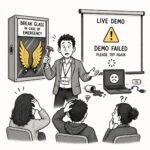
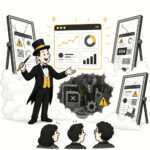
Smoke and Mirrors describes deceptive, misleading, or heavily embellished information used to disguise an unpleasant truth or make something appear better than it is. In UX design, smoke and mirrors refers to design illusions such as high-fidelity prototypes or deceptive micro-interactions that make a product feel highly functional, responsive, or simple on the surface while masking deep back-end complexity or missing features.


Continue Reading60 • Smoke and Mirrors
Read more about the article 59 • Hawthorne Effect
Hawthorne Effect

59 • Hawthorne Effect

The Hawthorne Effect is a type of behavioral reactivity in which individuals change their behavior simply because they know they are being observed. In UX research, this creates a subtle but powerful distortion: the moment a session begins, the behavior you are trying to study is no longer entirely natural. Participants become more attentive, more deliberate, and often more careful than they would be in their everyday interactions. As a result, what looks like a smooth and successful experience in testing can quietly mask the friction and confusion that exist in the real world.

Continue Reading59 • Hawthorne Effect
Read more about the article 58 • Bells and Whistles
Bells and Whistles

58 • Bells and Whistles

Bells and whistles are non-essential, flashy features or embellishments that enhance a product's appeal but are not required for core functionality. While sometimes adding delight or immersion, they often risk obscuring core user needs, leading to increased complexity, cognitive load, and reduced usability. In UX design, bells and whistles may refer to elaborate animations, unnecessary 3D effects, or complex customization options that make the interface sparkle, the interactions feel fancy, and the feature list sounds exciting - but do little to enhance the core experience.

Continue Reading58 • Bells and Whistles
Read more about the article 57 • Winging It
Winging It

57 • Winging It

Winging It refers to improvising or operating without a formalized, structured plan, often creating design solutions or research approaches "on the fly". As a strategy, it is generally considered unprofessional and risky in a professional UX context, as you should always follow a defined, strategic process. As a situation, winging it is almost inevitable. UX consultants cannot control all aspects of their work and winging it is therefore a key skill in their toolbox of techniques to turn awkward situations into research gold.

Continue Reading57 • Winging It
Read more about the article 56 • Vibe Coding
Vibe Coding

56 • Vibe Coding

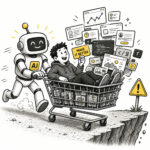
Vibe Coding is a software development practice assisted by artificial intelligence (AI) where the developer describes the outcome through prompts, trusting that the system will figure out the rest. Instead of carefully designing solutions, you prompt, generate, test, tweak, and repeat. The software begins to take shape quickly, features appear almost instantly, and progress feels effortless. It's tempting to rely on results and follow-up prompts to guide changes whilst accepting AI-generated code without thorough review.

Continue Reading56 • Vibe Coding
Read more about the article 55 • Throwing Spaghetti at the Wall
Throwing Spaghetti at the Wall

55 • Throwing Spaghetti at the Wall

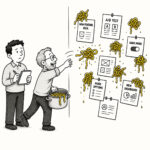
Throwing spaghetti at the wall to see what sticks is a common English idiom that refers to haphazardly testing multiple random ideas, strategies, or creative solutions to see which one yields results. In UX design, it is often used to brainstorm ideas where teams lack a specific strategy and tries out many different approaches through pure trial and error.

Continue Reading55 • Throwing Spaghetti at the Wall
Read more about the article 54 • Data–Ink Ratio
Data-Ink Ratio

54 • Data–Ink Ratio

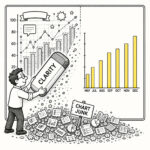
Data ink refers to the ink (or pixels) that represents the actual data in a visualization. The Data-Ink Ratio measures the proportion of ink used to represent data compared to the total amount of ink used in the graphical presentation, including non-data elements. In visual design, it is therefore essential to prioritize increasing the data-ink ratio by utilizing data ink exclusively and minimizing or eliminating non-essential ink. By doing so, the focus remains on the data rather than unnecessary or decorative design elements such as gradients, shadows, borders, labels, widgets, or enthusiastic gridlines.

Continue Reading54 • Data–Ink Ratio
Read more about the article 53 • Boilerplate
Boilerplate

53 • Boilerplate

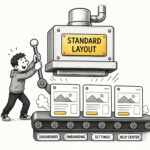
The term boilerplate refers to a standard, reusable piece of content used in various types of content, including articles, communication materials such as press releases, and contracts. It serves as a template for specific types of content, allowing consistency and efficiency in writing and communication. In design, boilerplate elements include UI components, layout templates, or design systems to speed up the product development process. These pre-built kits aim to ensure consistency, reduce errors, and allow designers to focus on unique user needs rather than rebuilding basic elements.

Continue Reading53 • Boilerplate
Read more about the article 52 • Brainstorming
Brainstorming

52 • Brainstorming

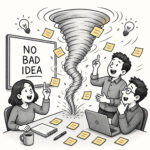
Brainstorming is a collaborative, creative process designed to generate a wide range of ideas, enhance team collaboration, and solve complex problems. It typically involves a group of people that interact to suggest spontaneous ideas in response to a prompt. In UX and product design, brainstorming appears everywhere - discovery workshops, Crazy 8s, sketching sessions, storyboarding, concept generation, and the occasional meeting that wasn't supposed to be a brainstorm but somehow became one. Done well, brainstorming expands the solution space and helps teams escape their first obvious idea. Done badly, eight people spend an hour watching the loudest person redesign the product.

Continue Reading52 • Brainstorming
Read more about the article 51 • Gold Plating
Gold Plating

51 • Gold Plating

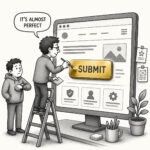
Gold Plating is a term that means working on a project or task past the point of diminishing returns. It refers to the practice of adding extra features or "polishing" designs beyond the agreed scope without measurably increasing quality. In UX, designers sometimes try to improve the look and feel with the desire to exceed expectations, often not realizing that their extra effort doesn't add real value to the user experience. Instead, it introduces unnecessary cost and potential technical debt as these extras take time and go undocumented.

Continue Reading51 • Gold Plating