Read more about the article 53 • Boilerplate
Boilerplate

53 • Boilerplate

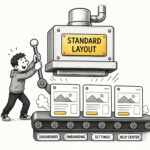
The term boilerplate refers to a standard, reusable piece of content used in various types of content, including articles, communication materials such as press releases, and contracts. It serves as a template for specific types of content, allowing consistency and efficiency in writing and communication. In design, boilerplate elements include UI components, layout templates, or design systems to speed up the product development process. These pre-built kits aim to ensure consistency, reduce errors, and allow designers to focus on unique user needs rather than rebuilding basic elements.

Continue Reading53 • Boilerplate
Read more about the article 48 • Hofstadter’s Law
Hofstaedter's Law

48 • Hofstadter’s Law

Hofstadter’s Law is a phenomenon which states that “It always takes longer than you expect, even when you account for Hofstadter’s Law.” It describes the widely experienced difficulty of accurately estimating the time it will take to complete tasks of substantial complexity. The fact that it references itself signals that it takes longer even though we are aware and expect that it will take longer. In product design, the law highlights a recurring failure in estimating time for complex tasks - especially those involving creativity, uncertainty, and iteration.

Continue Reading48 • Hofstadter’s Law
Read more about the article 47 • Bus Factor
Bus Factor

47 • Bus Factor

The bus factor is the minimum number of team members that have to suddenly disappear from a project before the project stalls due to lack of knowledgeable or competent personnel. It measures how fragile a system is. If the answer is one, you don’t have a team - you have a single point of failure. In software and product development, this concept measures the risk based on how knowledge and responsibility are distributed. The higher the number, the safer the system.

Continue Reading47 • Bus Factor
Read more about the article 45 • Diderot Effect
Diderot Effect

45 • Diderot Effect

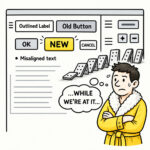
The Diderot Effect describes what happens when an improvement in one part makes everything else feel inconsistent, outdated, or "less than." That initial improvement triggers a cascade of additional changes - not because they were needed, but because now they feel needed. In UX, this is dangerous because it turns focused refinements into sprawling redesigns.

Continue Reading45 • Diderot Effect
Read more about the article 18 • Pogo Sticking
Pogo Sticking

18 • Pogo Sticking

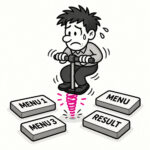
Pogo sticking describes the frustrating user behavior of repeatedly jumping back and forth between a main page and individual items in a list, like bouncing up and down on a pogo stick, because they can’t find what they need or navigate efficiently. It’s a sign of poor information scent, weak previews, or a lack of helpful context.

Continue Reading18 • Pogo Sticking
Read more about the article 15 • Paving the Cow Path
Paving the Cow Path

15 • Paving the Cow Path

Paving the cow path happens when you formalize and reinforce an existing user behavior or process, rather than designing a completely new one. In UX, it means observing how users already navigate your product, even if it’s messy, and then improving or streamlining that exact behavior, instead of forcing a “better” way that nobody asked for.

Continue Reading15 • Paving the Cow Path