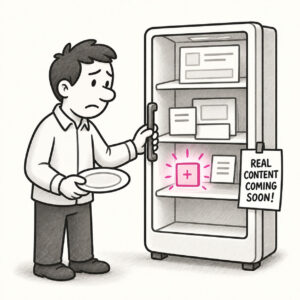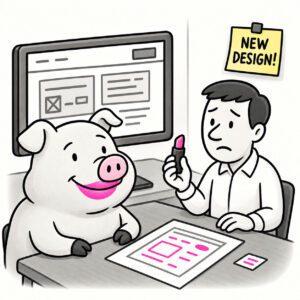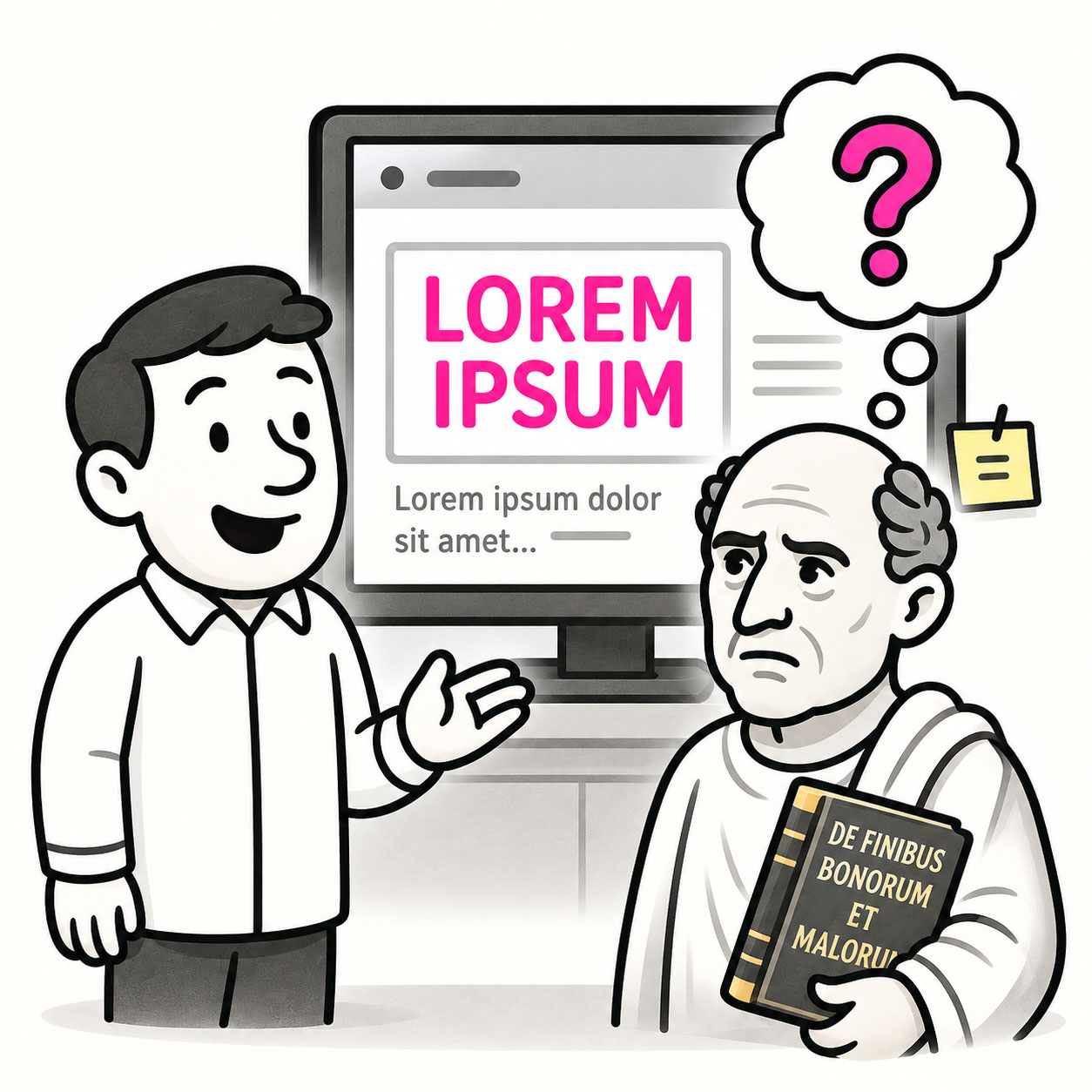
The Lorem Ipsum Trap refers to the mistake of designing and evaluating interfaces with placeholder text, like the classic “lorem ipsum” filler, instead of realistic, meaningful content. It’s what happens when designs look polished in mockups but break down when confronted with the messy, unpredictable reality of actual user content.
ORIGIN
Lorem Ipsum originates from a first-century BC Latin text by Marcus Tullius Cicero called “De Finibus Bonorum et Malorum” (On the Ends of Good and Evil). A 16th-century typesetter scrambled passages from this work to create a nonsensical placeholder text used for demonstrating typography and layouts in print and web design. While it’s a scrambled version of real Latin, the resulting text has been altered so much it no longer forms meaningful sentences.
In UX design, it’s meant to fill space and approximate text flow during early stages of layout work. But relying on this placeholder text for too long creates a trap: decisions get made based on fake content, hiding real usability issues.
WHEN
You’re likely to fall into the Lorem Ipsum Trap when:
- Presenting high-fidelity mockups with perfectly balanced placeholder text.
- Not testing how interfaces behave with real-world lengths, tone, or errors in content.
- Finalizing typography, spacing, or hierarchy decisions without actual copy.
- Assuming users will write neatly and concisely, when they usually don’t.
It’s particularly common in early redesigns or when designers and content teams work in silos.
WHY
It’s easy to fall into the Lorem Ipsum Trap because dummy text is fast and neutral. It lets you focus on layout and style without worrying about words. But designs are supposed to support communication, and without real words, you can’t assess how effectively they do that.
HOW
Here’s how to avoid or escape the Lorem Ipsum Trap:
- Collaborate early. Work with content writers or product owners to draft even rough copy.
- Use real examples. Pull actual user-generated content or representative data into your designs.
- Test extremes. Include unusually long, short, and awkward text to stress-test your layout.
- Design for flexibility. Make sure components can gracefully handle different content lengths and tones.
- Flag placeholders. If you must use lorem ipsum, clearly mark it as temporary and replace it as soon as possible.
PRO TIP
If you’re presenting a design with placeholder text, clearly say: “These words are not final, but here’s what we’ll need to decide.” This keeps everyone aware that copy still needs attention.
EXAMPLES
- A card layout that looks clean with lorem ipsum, but overflows when a real product title is much longer.
- A hero banner designed with two-line placeholder text but becomes illegible when real marketing copy is five lines.
- A form with tiny labels that seem fine with dummy text but wrap awkwardly when translated or localized.
CONCLUSION
The Lorem Ipsum Trap reminds us that great UX is about communication. Design with real content, or at least realistic content, in mind, or risk creating beautiful but broken experiences.
Also known as: Greeking it • Placeholder trap • Dummy copy blindness