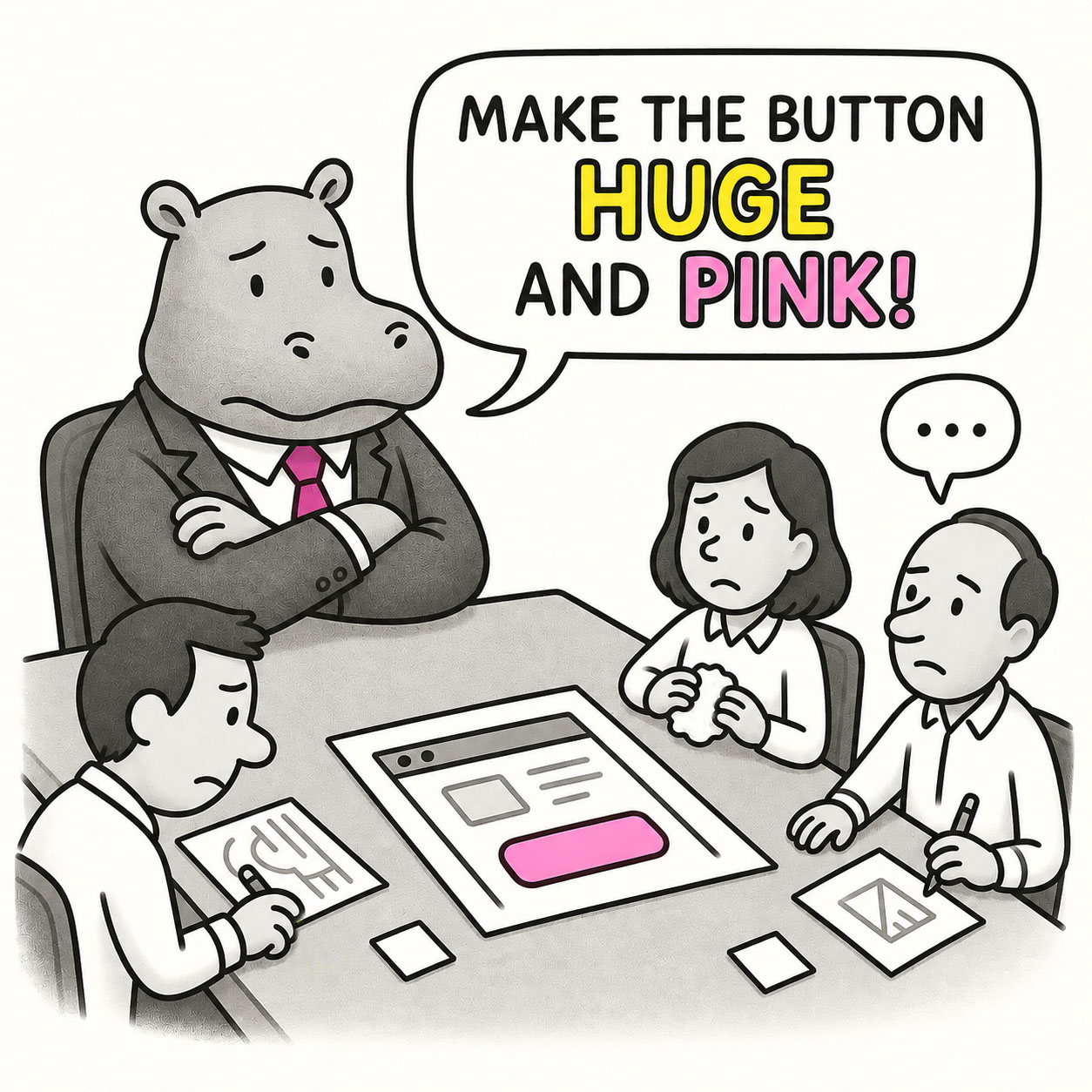
HiPPO stands for Highest Paid Person’s Opinion. It describes the all-too-common situation where decisions about design, product, or strategy are driven not by evidence or user needs, but by the gut feelings of the most senior (and often least informed) person in the room.
ORIGIN
The acronym HiPPO became popular in the early 2000s in the context of data-driven decision-making. As analytics and user research became more accessible, the idea of blindly following the HiPPO became shorthand for outdated, top-down decision cultures that ignore data and expertise.
In UX, it’s a warning: even well-meaning leaders can derail good design if you don’t bring evidence to the table.
WHEN
You’ll see HiPPOs assert themselves when:
- A senior exec insists on a color or layout choice because “I like it better this way.”
- A manager overrides usability findings with their own assumptions.
- Research and testing results are ignored in favor of “what the boss wants.”
- A design review turns into a personal preference debate led by the highest-paid attendee.
It’s particularly common in organizations that lack a strong culture of research or data-driven design.
WHY
HiPPOs rule when:
- Teams fail to gather or present data to back up decisions.
- Stakeholders equate seniority with user understanding.
- There’s a lack of trust in design and research expertise.
- Time pressures lead to quick, opinion-based calls.
But users don’t care about opinions in the boardroom, they care about how the product works for them.
HOW
Here’s how to keep the HiPPO from running wild:
- Bring data. Prepare user research, usability testing results, and analytics to back your recommendations.
- Tell user stories. Frame decisions in terms of real user impact, not just design theory.
- Facilitate discussions. Create structured ways for everyone to weigh in without defaulting to hierarchy.
- Educate gently. Help senior stakeholders understand the value of evidence-based design.
- Pick your battles. Sometimes you won’t win today, plan to demonstrate value over time.
PRO TIP
When possible, show recordings or quotes from real users. It’s harder for a HiPPO to dismiss a customer saying, “I don’t understand how to use this”.
EXAMPLES
- A CEO rejects tested, accessible designs in favor of their personal favorite color palette.
- A VP demands a carousel on the homepage despite evidence that users ignore it.
- A product manager pushes through an extra signup step because “it feels more premium,” ignoring increased drop-off rates.
CONCLUSION
HiPPO reminds us that good design isn’t about pleasing the boss, it’s about serving the user. Data beats gut feelings, no matter who’s in charge.
Also known as: Opinion-driven design • Design by dictatorship • Seniority bias