Wizard of Oz testing is a research method where users interact with what they believe is a fully functioning product or system, but behind the scenes, a human is performing some or all the work. It’s a clever way to test ideas quickly without having to build full functionality yet.
ORIGIN
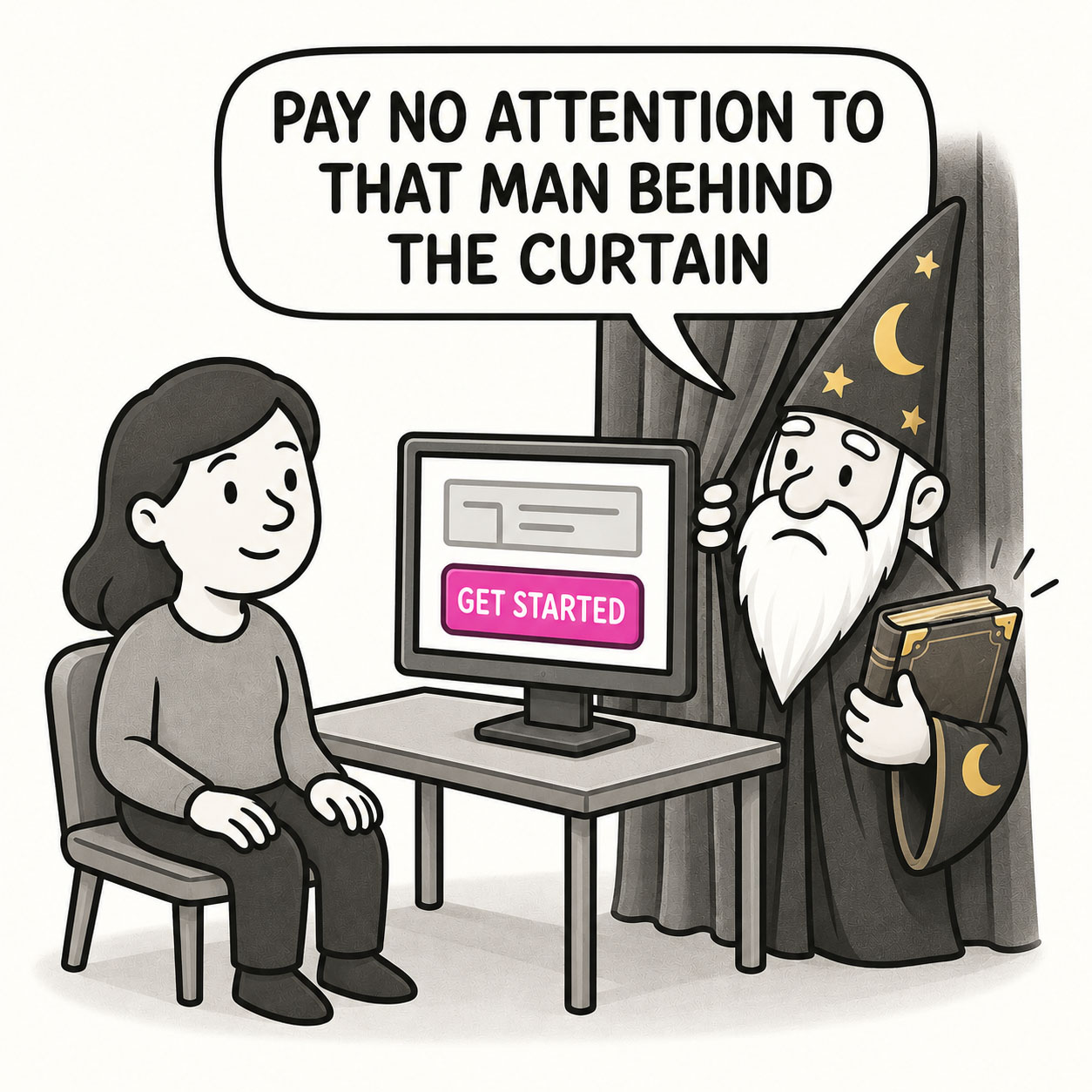
The name comes from the children’s novel The Wonderful Wizard of Oz by Frank Baum where the powerful “wizard” is revealed to be just a man behind a curtain, pulling levers.
In UX and product development, the metaphor describes how designers and researchers simulate a working system by “manually operating the curtain,” allowing them to observe how users behave without expensive engineering up front.
WHEN
Wizard of Oz testing works best when:
- You need to test a concept that would be expensive or time-consuming to fully build.
- You want to understand how users would interact with AI, automation, or chatbots before developing the technology.
- You’re prototyping a service experience that involves complex behind-the-scenes operations.
- You want fast feedback on workflows and expectations, not performance.
It’s particularly useful in early-stage exploration of new features or products, especially when feasibility is uncertain.
WHY
Wizard of Oz testing lets you validate user needs and behaviors before investing in implementation. It allows you to experiment with different approaches and gather realistic data quickly. By faking the back end, you can focus on what really matters: how users perceive and interact with the front end.
HOW
Here’s how to run Wizard of Oz tests effectively:
- Define the illusion. Decide what part of the experience users should believe is real.
- Script responses. Prepare how you’ll handle common user actions and questions.
- Train the wizard. Make sure the person behind the curtain understands their role.
- Stay invisible. Don’t let users see or hear the wizard operating the system.
- Debrief users. After the test, explain what was simulated and ask for feedback on their experience.
PRO TIP
Record the wizard’s workload too, sometimes these tests reveal hidden operational costs or opportunities for automation.
EXAMPLES
- A chatbot prototype where a researcher types the “bot” replies in real time during user testing.
- A voice assistant test where someone listens and manually triggers actions on the user’s device.
- An online shopping flow where inventory and order fulfillment are handled by hand behind the scenes during testing.
CONCLUSION
Wizard of Oz testing reminds us that you don’t need a finished product to learn how users will respond. Sometimes the best way to test magic is to start with a wizard behind the curtain.
Also known as: WOz testing • Manual simulation • Concierge MVP (closely related, but often more about live service than testing)