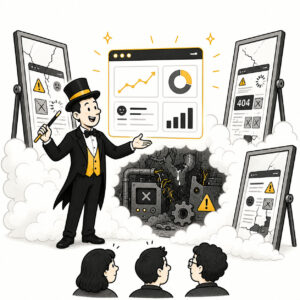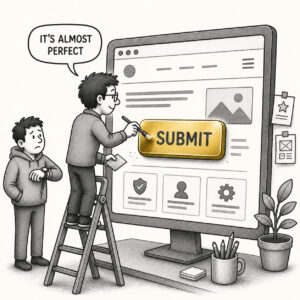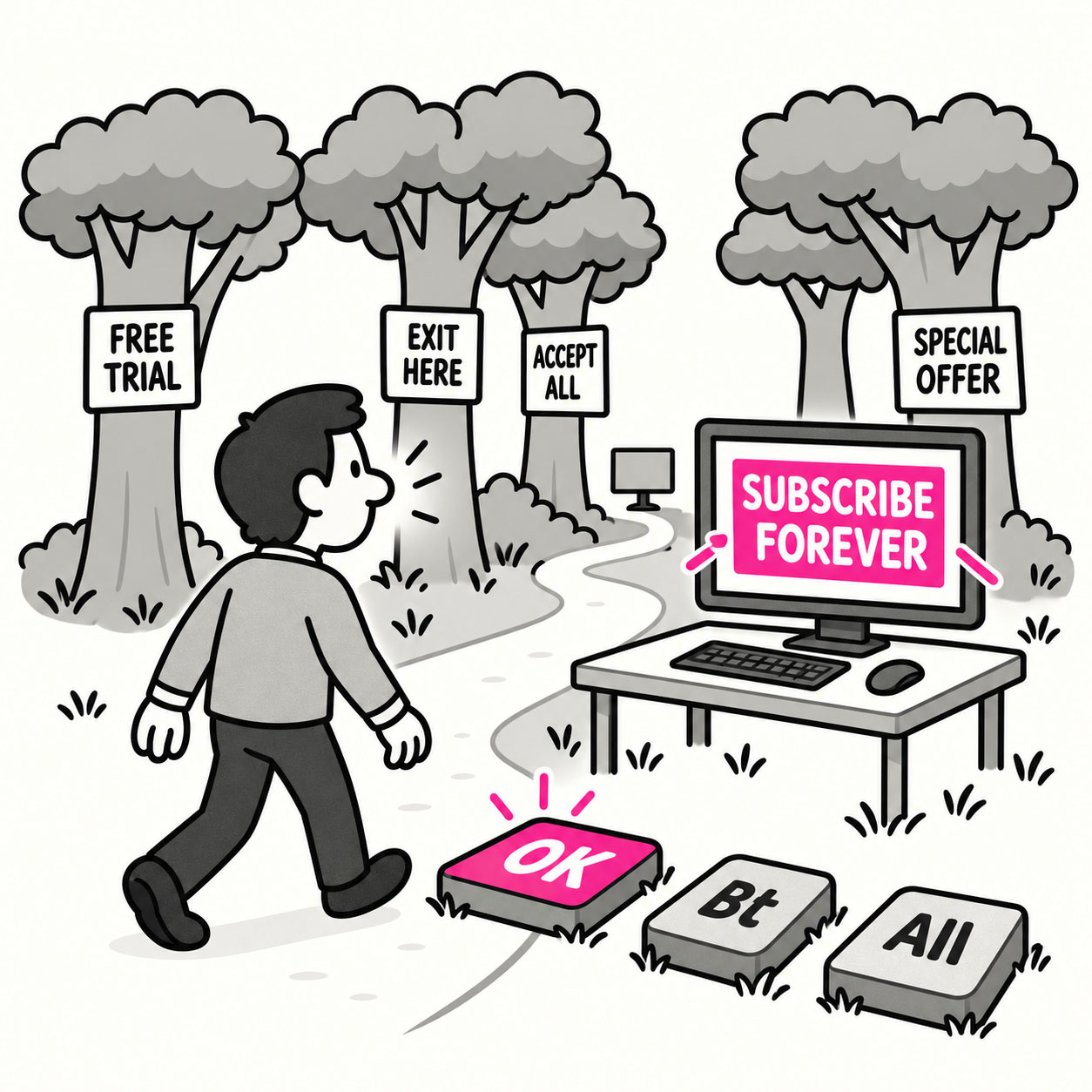
Dark Forest UX describes a user experience that feels inscrutable, unpredictable, or even threatening, much like wandering through a dark forest. For users, it’s an experience where they’re unsure what’s happening, what’s safe to do next, or what consequences their actions might trigger.
ORIGIN
The phrase comes from Liu Cixin’s sci-fi novel The Dark Forest, where the universe is compared to a dark forest full of hidden dangers: every civilization stays quiet and cautious because making noise might attract predators.
In UX, the metaphor has been adopted to describe online environments where users feel lost, watched, or manipulated, unsure if they can trust the product, the company, or even their own actions. It’s often associated with dark patterns, manipulative personalization, or opaque algorithms that erode user confidence.
WHEN
You’ll notice Dark Forest UX creeping in when:
- Users don’t understand what data is being collected, or why.
- Interfaces obscure what happens next or hide consequences of choices.
- Content feels personalized in eerie, unexplained ways.
- Algorithms create feedback loops that feel out of the user’s control.
- Support channels and options are hidden or ambiguous.
It’s particularly common in social platforms, ad-driven services, and marketplaces where business incentives and user incentives aren’t aligned.
WHY
Products end up with Dark Forest UX because:
- Businesses prioritize engagement or revenue over clarity and trust.
- Teams design for short-term metrics rather than long-term relationships.
- Opaque AI or personalization systems are deployed without explanation.
- No one is accountable for communicating clearly to users.
While this approach may seem effective in the short term, it can harm trust, brand reputation, and retention.
HOW
Here’s how to avoid creating a Dark Forest UX:
- Be transparent. Tell users what data you’re collecting and why.
- Clarify consequences. Make it clear what happens when users take an action.
- Explain personalization. Show users why they’re seeing certain content or offers.
- Offer choices. Let users opt in or adjust settings easily.
- Test trust. Include questions in research that measure whether users feel in control and safe.
PRO TIP
Run a usability test specifically asking users: “What do you think happens next?” at critical moments in your flow. If they hesitate or can’t answer, you might have a dark forest problem.
EXAMPLES
- A user sees eerily specific ads or recommendations but doesn’t know why.
- A subscription service makes it impossible to cancel, with hidden buttons or confusing language.
- A social network changes privacy settings or feeds without explaining the impact.
CONCLUSION
Dark Forest UX reminds us that good design is more than functional, it’s also about building a relationship of trust with your users. Help them feel safe and in control, not lost and manipulated.
Also known as: Opaque UX • Mysterious UX • The opposite of trust-centered design