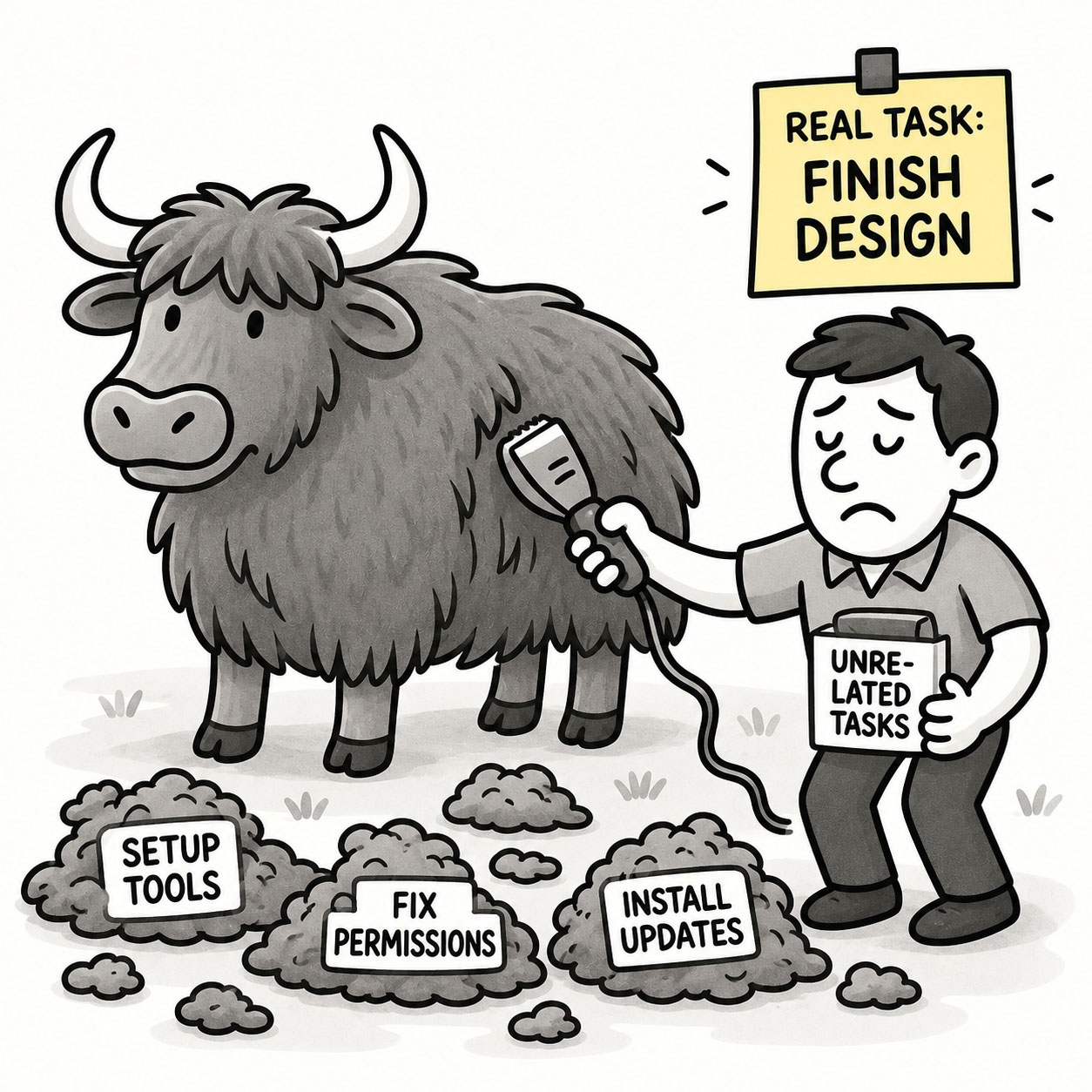
Yak shaving describes the endless, sometimes absurd chain of small, unexpected tasks that you end up doing when trying to complete a bigger goal. In UX work, it happens when progress gets bogged down in tangential chores that feel disconnected from the actual objective.
ORIGIN
The term comes from a humorous anecdote about needing to shave a yak before you can finish a completely unrelated task, coined by MIT researcher Carlin Vieri in the 1990s. It spread through the developer and product community to describe those frustrating, recursive detours that derail focus.
WHEN
You’ll notice yak shaving when:
- You start fixing a bug and end up upgrading libraries and rewriting unrelated code.
- A simple research question spirals into hours of finding, cleaning, and reformatting data.
- A quick UI tweak requires setting up a whole new design system just to get started.
It’s especially common in legacy products and fast-moving teams where dependencies aren’t clear.
WHY
Yak shaving happens because work is interconnected. Sometimes the quickest way to do something “right” requires a lot of foundational work. While it can feel frustrating, it’s not always bad, just make sure the detours contribute to the bigger goal.
HOW
Here’s how to manage yak shaving:
- Pause and assess. Is this detour necessary right now?
- Define scope. Set boundaries for how far you’ll go before returning to the main task.
- Document as you go. Note what you uncover so others can benefit later.
- Time-box. If progress stalls, park the yak and come back when you have more bandwidth.
- Communicate. Let your team know why you’re delayed, which helps avoid surprises.
PRO TIP
Before you start shaving the yak, ask: “Is there another way to get this done without fixing everything first?”
EXAMPLES
- Trying to adjust a button color but realizing you need to refactor an entire CSS file and update outdated dependencies.
- Needing a user insight, then realizing your analytics aren’t properly tracking events, and fixing that takes half a day.
- Updating a presentation but discovering the templates and brand guidelines are missing or broken.
CONCLUSION
While sandbagging can provide a buffer against unforeseen challenges and help teams manage stakeholder expectations, it also risks eroding trust if overused or discovered. Striking a balance between honest communication and cautious optimism is essential to fostering a culture of transparency and sustainable achievement.
Also known as: Chasing your tail • Tangent spiral • Task inception