Read more about the article 60 • Smoke and Mirrors
Smoke and Mirrors

60 • Smoke and Mirrors

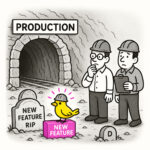
Smoke and Mirrors describes deceptive, misleading, or heavily embellished information used to disguise an unpleasant truth or make something appear better than it is. In UX design, smoke and mirrors refers to design illusions such as high-fidelity prototypes or deceptive micro-interactions that make a product feel highly functional, responsive, or simple on the surface while masking deep back-end complexity or missing features.
Continue Reading60 • Smoke and Mirrors
Read more about the article 55 • Throwing Spaghetti at the Wall
Throwing Spaghetti at the Wall

55 • Throwing Spaghetti at the Wall

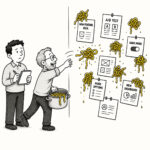
Throwing spaghetti at the wall to see what sticks is a common English idiom that refers to haphazardly testing multiple random ideas, strategies, or creative solutions to see which one yields results. In UX and product development, the pattern appears when experimentation loses its connection to a clear problem, hypothesis, or strategy. Instead of deciding what we need to learn and designing an experiment around it, we simply try things.

Continue Reading55 • Throwing Spaghetti at the Wall
Read more about the article 53 • Boilerplate
Boilerplate

53 • Boilerplate

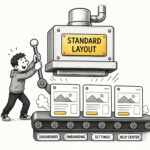
The term boilerplate refers to a standard, reusable piece of content used in various types of content, including articles, communication materials such as press releases, and contracts. It serves as a template for specific types of content, allowing consistency and efficiency in writing and communication. In design, boilerplate elements include UI components, layout templates, or design systems to speed up the product development process. These pre-built kits aim to ensure consistency, reduce errors, and allow designers to focus on unique user needs rather than rebuilding basic elements.

Continue Reading53 • Boilerplate
Read more about the article 42 • Murphy’s Law
Murphy’s Law

42 • Murphy’s Law

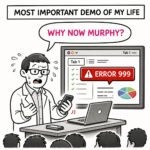
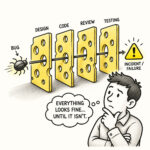
Murphy’s Law is the cheerful little reminder that "anything that can go wrong, will go wrong". In UX and product design, Murphy's Law captures the grim inevitability that if there's a way for something to fail - no matter how unlikely - it eventually will. A feature will break at the worst possible moment. A user will try the one interaction no one tested. A stakeholder's favorite edge case turns out to be a real-world requirement. Murphy's Law isn't pessimism - it's about preparation.

Continue Reading42 • Murphy’s Law
Read more about the article 27 • UX Theater
UX Theater

27 • UX Theater

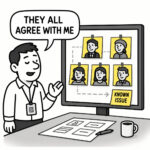
UX Theater is when a team goes through the motions of doing user experience work, but without improving the experience. It’s the performance of design thinking: sticky notes, empathy maps, and user personas that look great in a presentation, but have little to no impact on the final product. It’s like hosting a cooking show and never actually serving a meal.

Continue Reading27 • UX Theater
Read more about the article 24 • Sad Path
Sad Path

24 • Sad Path

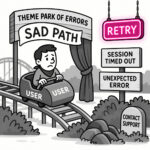
A sad path is the scenario where something goes wrong in a user’s journey, whether it’s an error, invalid input, unexpected behavior, or a dead end. In UX, designing for the sad path means accounting for mistakes, edge cases, and failures gracefully, so users can recover without frustration.

Continue Reading24 • Sad Path