Read more about the article 65 • Shooting from the Hip
Shooting from the Hip

65 • Shooting from the Hip

The phrase shooting from the hip is a metaphor for speaking or acting impulsively, without careful consideration or preparation. Someone who "shoots from the hip" trusts instinct and reacts immediately rather than stopping to analyze the situation. In UX design, it means making fast, intuitive product or layout decisions based on personal taste, gut feeling, or past experience rather than waiting for formal user research or metrics. It trades empirical validation for speed. Sometimes the shot lands, but unfortunately, that tends to make everyone forget about the shots that didn’t.

Continue Reading65 • Shooting from the Hip
Read more about the article 64 • Walking on Eggshells
Walking on Eggshells

64 • Walking on Eggshells

Walking on Eggshells means being extremely cautious in one’s actions or words, usually to avoid upsetting someone else. Avoiding conflict becomes more important than improving the product. In product design, walking on eggshells means that problems are discussed privately instead of openly, feedback gets softened, and research findings are carefully worded so nobody feels implicated. And that feature requested by the executive? Everyone knows it is questionable but nobody wants to be the person who says so. The team is still communicating - it just isn't saying what it really thinks.

Continue Reading64 • Walking on Eggshells
Read more about the article 63 • IKEA Effect
IKEA Effect

63 • IKEA Effect

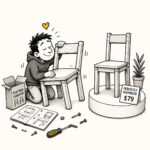
The IKEA Effect is a psychological phenomenon where users love a product more because they helped build it. When users invest time and effort to set things up, they feel proud of the outcome which can significantly influence a product's perceived value and subsequent customer behavior with it. In UX design, this effect can be used to boost brand loyalty and engagement. Users love the solution - not because it's better - but because it feels personal and earned.

Continue Reading63 • IKEA Effect
Read more about the article 62 • Analysis Paralysis
Analysis Paralysis

62 • Analysis Paralysis

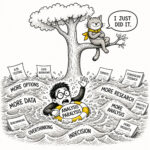
Analysis Paralysis is what happens when the pursuit of the best decision prevents any decision at all. Faced with too many options, too much information, or too many possible outcomes, thinking begins to replace action. What starts as careful consideration slowly turns into hesitation, as each new piece of data introduces additional complexity rather than clarity. The intent is to make a better choice - but the result is often no choice at all. In UX and product design, the dynamic is the same. More options, more data, and more possibilities promise better decisions - but without focus, they often lead to hesitation instead.

Continue Reading62 • Analysis Paralysis
Read more about the article 61 • Cutting Corners
Cutting Corners

61 • Cutting Corners

Cutting Corners means skipping important work to save money today, only to spend considerably more time fixing the consequences tomorrow. In UX, research or testing phases are abbreviated, omitted or postponed. Under pressure, these shortcuts feel rational because the product ships faster. But this practice usually backfires because the problems simply arrive later. You end up building a product that users don't want, leading to higher cost, extra fixes, and lost revenue.

Continue Reading61 • Cutting Corners
Read more about the article 58 • Bells and Whistles
Bells and Whistles

58 • Bells and Whistles

Bells and whistles are non-essential, flashy features or embellishments that enhance a product's appeal but are not required for core functionality. While sometimes adding delight or immersion, they often risk obscuring core user needs, leading to increased complexity, cognitive load, and reduced usability. In UX design, bells and whistles may refer to elaborate animations, unnecessary 3D effects, or complex customization options that make the interface sparkle, the interactions feel fancy, and the feature list sounds exciting - but do little to enhance the core experience.

Continue Reading58 • Bells and Whistles
Read more about the article 55 • Throwing Spaghetti at the Wall
Throwing Spaghetti at the Wall

55 • Throwing Spaghetti at the Wall

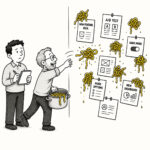
Throwing spaghetti at the wall to see what sticks is a common English idiom that refers to haphazardly testing multiple random ideas, strategies, or creative solutions to see which one yields results. In UX and product development, the pattern appears when experimentation loses its connection to a clear problem, hypothesis, or strategy. Instead of deciding what we need to learn and designing an experiment around it, we simply try things.

Continue Reading55 • Throwing Spaghetti at the Wall
Read more about the article 49 • Thinking Outside The Box
Thinking Outside the Box

49 • Thinking Outside The Box

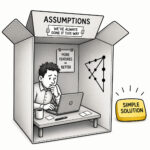
The idiom thinking outside the box describes the ability to approach a problem from a different perspective instead of accepting its stated or assumed boundaries. It also requires to think differently and unconventionally, finding novel solutions simply by asking: "Wait, who said there was a box?" In design, creative thinking is often constrained by unvalidated assumptions that "box" us into what we believe the solution space is. The box isn’t real, yet it is treated as such and therefore triggers suboptimal choices and results.

Continue Reading49 • Thinking Outside The Box
Read more about the article 48 • Hofstadter’s Law
Hofstadter’s Law

48 • Hofstadter’s Law

Hofstadter’s Law is a phenomenon which states that “It always takes longer than you expect, even when you account for Hofstadter’s Law.” It describes the widely experienced difficulty of accurately estimating the time it will take to complete tasks of substantial complexity. The fact that it references itself signals that it takes longer even though we are aware and expect that it will take longer. In product design, the law highlights a recurring failure in estimating time for complex tasks - especially those involving creativity, uncertainty, and iteration.

Continue Reading48 • Hofstadter’s Law
Read more about the article 45 • Diderot Effect
Diderot Effect

45 • Diderot Effect

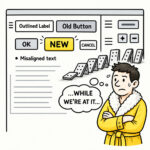
The Diderot Effect describes what happens when an improvement in one part makes everything else feel inconsistent, outdated, or "less than." That initial improvement triggers a cascade of additional changes - not because they were needed, but because now they feel needed. In UX, this is dangerous because it turns focused refinements into sprawling redesigns.

Continue Reading45 • Diderot Effect