Read more about the article 66 • Low-Hanging Fruit
Low-Hanging Fruit

66 • Low-Hanging Fruit

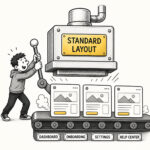
Low-Hanging Fruit is used to describe doing the simplest thing first. Teams prioritize the easiest problems to solve rather than the most important ones. Which, at first, makes perfect sense. Quick wins build momentum, demonstrate progress, and make roadmaps wonderfully satisfying places to move little boxes into the "Done" column. But ease is not the same as value. When teams repeatedly choose what is easiest to reach, they can spend enormous amounts of energy making small improvements while the difficult problems - the ones that could fundamentally improve the experience -remain safely untouched. In UX design, low-hanging fruit refers to minimal effort design fixes or optimizations such as fixing broken links, adjusting button contrast, or improving a confusing form field.

Continue Reading66 • Low-Hanging Fruit
Read more about the article 65 • Shooting from the Hip
Shooting from the Hip

65 • Shooting from the Hip

The phrase shooting from the hip is a metaphor for speaking or acting impulsively, without careful consideration or preparation. Someone who "shoots from the hip" trusts instinct and reacts immediately rather than stopping to analyze the situation. In UX design, it means making fast, intuitive product or layout decisions based on personal taste, gut feeling, or past experience rather than waiting for formal user research or metrics. It trades empirical validation for speed. Sometimes the shot lands, but unfortunately, that tends to make everyone forget about the shots that didn’t.

Continue Reading65 • Shooting from the Hip
Read more about the article 62 • Analysis Paralysis
Analysis Paralysis

62 • Analysis Paralysis

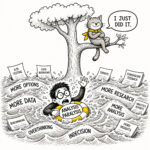
Analysis Paralysis is what happens when the pursuit of the best decision prevents any decision at all. Faced with too many options, too much information, or too many possible outcomes, thinking begins to replace action. What starts as careful consideration slowly turns into hesitation, as each new piece of data introduces additional complexity rather than clarity. The intent is to make a better choice - but the result is often no choice at all. In UX and product design, the dynamic is the same. More options, more data, and more possibilities promise better decisions - but without focus, they often lead to hesitation instead.

Continue Reading62 • Analysis Paralysis
Read more about the article 61 • Cutting Corners
Cutting Corners

61 • Cutting Corners

Cutting Corners means skipping important work to save money today, only to spend considerably more time fixing the consequences tomorrow. In UX, research or testing phases are abbreviated, omitted or postponed. Under pressure, these shortcuts feel rational because the product ships faster. But this practice usually backfires because the problems simply arrive later. You end up building a product that users don't want, leading to higher cost, extra fixes, and lost revenue.

Continue Reading61 • Cutting Corners
Read more about the article 56 • Vibe Coding
Vibe Coding

56 • Vibe Coding

Vibe Coding is a software development practice assisted by artificial intelligence (AI) where the developer describes the outcome through natural-language prompts, trusting that the system will figure out the rest. Instead of carefully designing solutions, you prompt, generate, test, tweak, and repeat. The software begins to take shape quickly, features appear almost instantly, and progress feels effortless. It's tempting to rely on results and follow-up prompts to guide changes whilst accepting AI-generated code without thorough review.

Continue Reading56 • Vibe Coding
Read more about the article 53 • Boilerplate
Boilerplate

53 • Boilerplate

The term boilerplate refers to a standard, reusable piece of content used in various types of content, including articles, communication materials such as press releases, and contracts. It serves as a template for specific types of content, allowing consistency and efficiency in writing and communication. In design, boilerplate elements include UI components, layout templates, or design systems to speed up the product development process. These pre-built kits aim to ensure consistency, reduce errors, and allow designers to focus on unique user needs rather than rebuilding basic elements.

Continue Reading53 • Boilerplate
Read more about the article 48 • Hofstadter’s Law
Hofstadter’s Law

48 • Hofstadter’s Law

Hofstadter’s Law is a phenomenon which states that “It always takes longer than you expect, even when you account for Hofstadter’s Law.” It describes the widely experienced difficulty of accurately estimating the time it will take to complete tasks of substantial complexity. The fact that it references itself signals that it takes longer even though we are aware and expect that it will take longer. In product design, the law highlights a recurring failure in estimating time for complex tasks - especially those involving creativity, uncertainty, and iteration.

Continue Reading48 • Hofstadter’s Law
Read more about the article 47 • Bus Factor
Bus Factor

47 • Bus Factor

The Bus Factor measures how many people would need to suddenly become unavailable before a project could no longer continue because critical knowledge disappeared with them. If the answer is one, you don’t have a team - you have a single point of failure. In software, UX, and product development, the Bus Factor exposes how much knowledge, context, and responsibility are concentrated in particular individuals. It's a measurement of risk; the lower the number, the more fragile the team.

Continue Reading47 • Bus Factor
Read more about the article 45 • Diderot Effect
Diderot Effect

45 • Diderot Effect

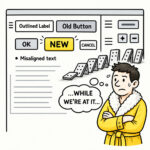
The Diderot Effect describes what happens when an improvement in one part makes everything else feel inconsistent, outdated, or "less than." That initial improvement triggers a cascade of additional changes - not because they were needed, but because now they feel needed. In UX, this is dangerous because it turns focused refinements into sprawling redesigns.

Continue Reading45 • Diderot Effect