Read more about the article 47 • Bus Factor
Bus Factor

47 • Bus Factor

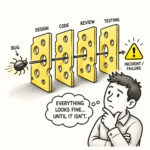
The Bus Factor measures how many people would need to suddenly become unavailable before a project could no longer continue because critical knowledge disappeared with them. If the answer is one, you don’t have a team - you have a single point of failure. In software, UX, and product development, the Bus Factor exposes how much knowledge, context, and responsibility are concentrated in particular individuals. It's a measurement of risk; the lower the number, the more fragile the team.

Continue Reading47 • Bus Factor
Read more about the article 46 • Streisand Effect
Streisand Effect

46 • Streisand Effect

The Streisand effect is a phenomenon where attempts to suppress or hide information inadvertently cause it to spread more widely, often creating the opposite of the intended effect. In UI design, attempts to obscure, bury, or quietly remove something often do the opposite - they draw attention to it. What users might never have noticed suddenly becomes the thing they focus on.

Continue Reading46 • Streisand Effect
Read more about the article 45 • Diderot Effect
Diderot Effect

45 • Diderot Effect

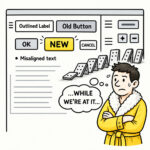
The Diderot Effect describes what happens when an improvement in one part makes everything else feel inconsistent, outdated, or "less than." That initial improvement triggers a cascade of additional changes - not because they were needed, but because now they feel needed. In UX, this is dangerous because it turns focused refinements into sprawling redesigns.

Continue Reading45 • Diderot Effect
Read more about the article 44 • Red Herring
Red Herring

44 • Red Herring

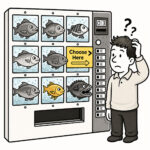
A Red Herring is a misleading or distracting element that pulls attention away from what actually matters. In UX, it can be accidental such as a design element that looks like it does the thing but doesn’t, something that distracts users from their primary goal or leads them toward the wrong conclusion. But it can also be intentional, such as a deliberate distraction used to test attention or a research question to validate that users don't rush through the study.

Continue Reading44 • Red Herring
Read more about the article 43 • Breadcrumbs
Breadcrumbs

43 • Breadcrumbs

Breadcrumbs help users understand where they are, how they got there, and how to get back - without feeling lost in the woods. In UX, breadcrumbs provide a clear trail through complex structures such as websites, apps, and map interfaces. They are a simple but powerful navigational aid that supports orientation, hierarchy, and confidence.

Continue Reading43 • Breadcrumbs
Read more about the article 42 • Murphy’s Law
Murphy’s Law

42 • Murphy’s Law

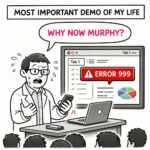
Murphy’s Law is the cheerful little reminder that "anything that can go wrong, will go wrong". In UX and product design, Murphy's Law captures the grim inevitability that if there's a way for something to fail - no matter how unlikely - it eventually will. A feature will break at the worst possible moment. A user will try the one interaction no one tested. A stakeholder's favorite edge case turns out to be a real-world requirement. Murphy's Law isn't pessimism - it's about preparation.

Continue Reading42 • Murphy’s Law
Read more about the article 41 • Kitchen Sink
Kitchen Sink

41 • Kitchen Sink

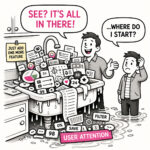
The Kitchen Sink is what happens when an app - or a map - tries to show everything and ends up explaining nothing. At first glance, it looks impressive. Packed. Comprehensive. Full of features, layers, and information. But spend more than a few seconds with it, and the experience quickly shifts from insight to overload. The eye jumps. The interface competes for attention. The meaning gets buried somewhere between panels, controls, and colors. The Kitchen Sink is not a failure of effort. It is a failure of prioritization.

Continue Reading41 • Kitchen Sink
Read more about the article 38 • AI Oracle Effect
AI Oracle Effect

38 • AI Oracle Effect

The AI Oracle Effect occurs when teams treat AI-generated output as inherently correct, authoritative, or strategically sound. AI stops being a tool and starts being treated like prophecy. Instead of questioning, validating, or contextualizing the output, the team begins deferring to it. Research becomes a prompt. Recommendations become decisions. The system becomes the oracle. And the room gets surprisingly quiet.

Continue Reading38 • AI Oracle Effect