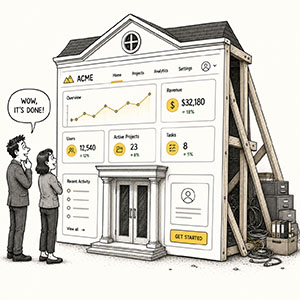
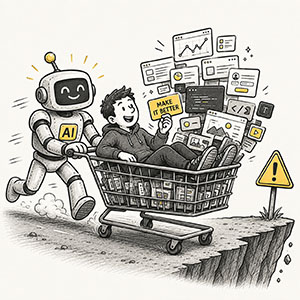
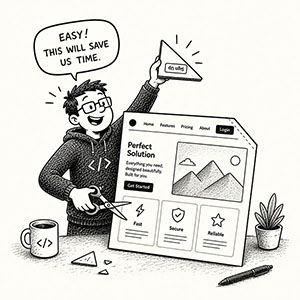
| "Just make it look nicer." |
Cosmetic improvements are hiding fundamental issues. |
Lipstick on a Pig
|
| "The UI looks modern now." |
Cosmetic polish hiding deeper problems |
Lipstick on a Pig
|
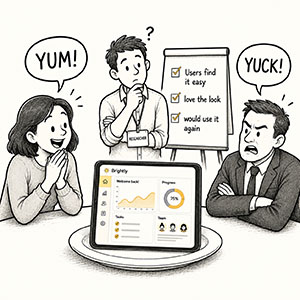
| "It's beautiful, but nobody can figure it out." |
Visual design is outperforming usability. |
Mullet UI
|
| "The homepage looks amazing, but the workflow is terrible." |
Style and substance are disconnected |
Mullet UI
|
| "Can we make it look like this one?" |
Designing for screenshots instead of real-world usage. |
Dribbblization
|
| "Apple/Google/TurboTax/Zillow does it this way." |
Copying solutions without understanding the problem. |
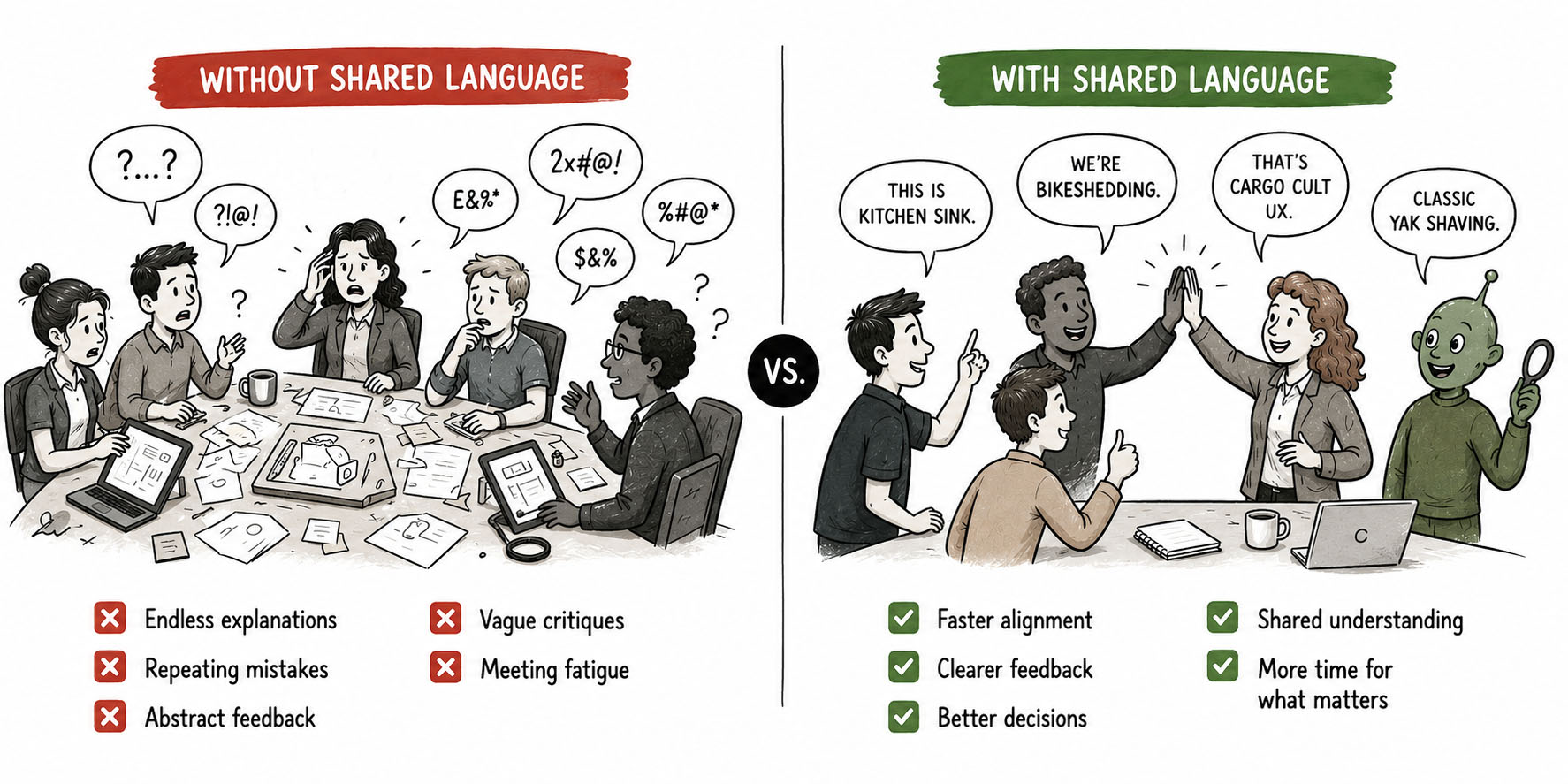
Cargo Cult UX
|
| "The button isn't aligned perfectly" |
Minor details are distracting from bigger issues. |
Pixel Peeping
|
| "Everyone gets their feature." |
Conflicting ideas have been stitched together. |
Frankenstein Design
|
| "We combined the best parts of six different apps." |
Incoherent stitched-together experience |
Frankenstein Design
|
| "We'll add the real content later." |
Designing without validating actual content. |
Lorem Ipsum Trap
|
| "We'll replace the placeholder content later." |
Designing without real content context |
Lorem Ipsum Trap
|
| "We've built the platform. What should it do?" |
Solution came before the problem. |
Empty Fridge Syndrome
|
| "Why does this app feel so empty?" |
Lack of meaningful content or affordances |
Empty Fridge Syndrome
|
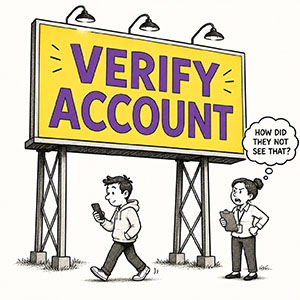
| "Technically users can find it." |
Users are lost and can't discover functionality. |
Dark Forest UX
|
| "Users just need to explore more." |
The interface intimidates users |
Dark Forest UX
|
| "It's almost human, but somehow creepy." |
Near-realistic interactions becoming unsettling |
Uncanny Valley
|
| "Before we can fix that, we need to do this, and then that, and that." |
Side quests are delaying the real task. |
Yak Shaving
|
| "We've spent 2 hours discussing button colors." |
Debating trivial details while major problems remain |
Bikeshedding
|
| "Explain it to me again..." |
Talking through the problem reveals the answer. |
Rubber Ducking
|
| "We'll promise less so expectations stay low." |
Intentionally lowering expectations |
Sandbagging
|
| "Users already do it this way." |
Existing behavior is being preserved rather than improved. |
Paving the Cow Path
|
| "Let's digitize the current workflow exactly as-is." |
Preserving flawed legacy processes |
Paving the Cow Path
|
| "We'll clean that up later." |
Short-term decisions are creating future costs. |
Design Debt
|
| "Every fix creates another problem." |
Constant reactive problem chasing |
Whack-a-Mole
|
| "Users keep bouncing between these screens." |
Navigation friction and poor findability |
Pogo Sticking
|
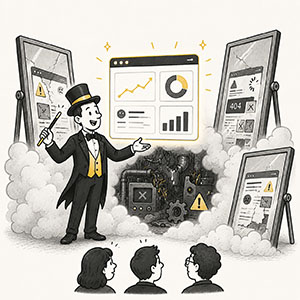
| "Let's fake it until we know it's worth building." |
Testing assumptions before investing heavily. |
Wizard of Oz Testing
|
| "We ran 50 experiments and learned nothing." |
Excessive testing without clear hypotheses. |
A/B Cemetery
|
| "The VP just dropped in and changed everything." |
Executives disrupting workflows without context |
Executive Seagull Effect
|
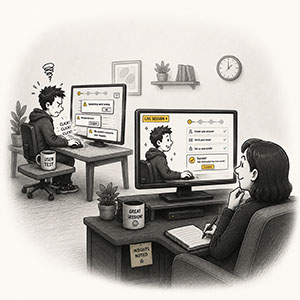
| "Do we actually use our own product?" |
The team isn't experiencing the product firsthand. |
Dogfooding
|
| "It works for me." |
Internal users are not representative users |
Dogfooding
|
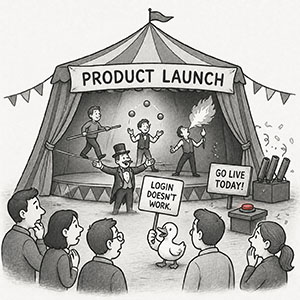
| "The demo worked perfectly." |
Only ideal scenarios were tested. |
Happy Path
|
| "Nobody thought about what happens if this fails." |
Edge cases are finally being considered. |
Sad Path
|
| "Users will definitely understand this." |
Assumptions are being mistaken for evidence. |
False Consensus Effect
|
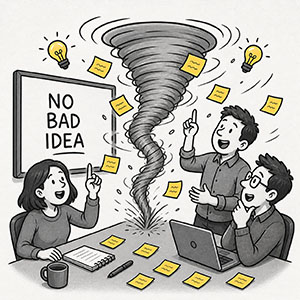
| "Let's get feedback from everyone." |
Too many opinions diluting decisions |
Design by Committee
|
| "The workshop was amazing." |
Performance of UX without meaningful outcomes |
UX Theater
|
| "Let's release it to a few people first." |
Controlled rollout minimizing risk |
Canary Release
|
| "The highest-paid person's opinion wins." |
Authority outweighing evidence |
HiPPO
|
| "It's just one tiny issue." |
Small quality problems eroding trust |
Broken Windows UX
|
| "We've already invested too much to stop now." |
Past investment is driving future decisions. |
Sunk Cost Fallacy
|
| "See? Users loved the prototype." |
Evidence is being selectively interpreted. |
Confirmation Bias
|
| "The first design felt better." |
Initial information disproportionately shaping decisions |
Anchoring Bias
|
| "I liked the first option best." |
Early information is receiving too much weight. |
Primacy Bias
|
| "The latest feedback changes everything." |
Recent events are being overweighted. |
Recency Bias
|
| "The more option the better." |
Too many choices are increasing complexity. |
Hick's Law
|
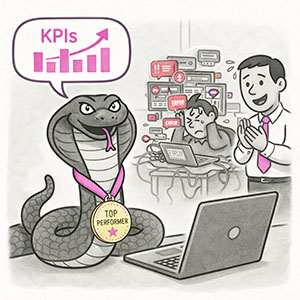
| "The incentive worked... sort of." |
The solution created a worse problem. |
Cobra Effect
|
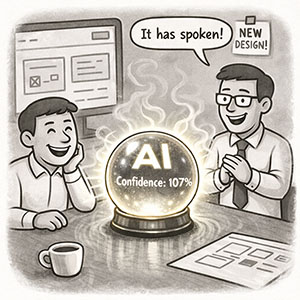
| "AI recommended it." |
AI output is being accepted without scrutiny. |
AI Oracle Effect
|
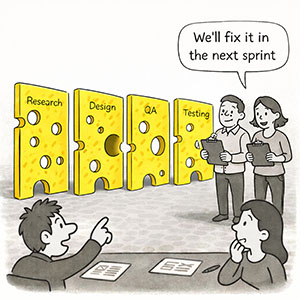
| "Everything looks fine." |
Small failures aligned into a larger failure. |
Swiss Cheese Model
|
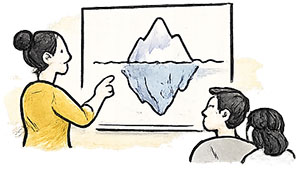
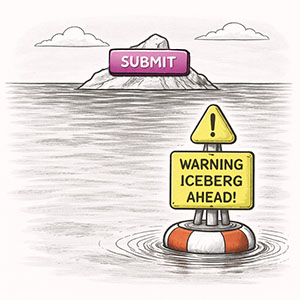
| "That's only the visible problem." |
Hidden causes exist beneath the surface. |
Iceberg Model
|
| "Can we just make the button bigger?" |
Fixing superficial problems sounds easy but comes with hidden risks. |
Iceberg Model
|
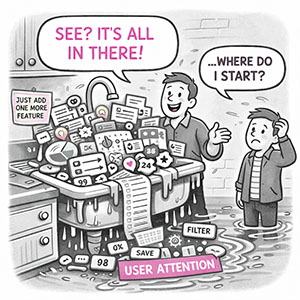
| "Wouldn't it be nice if it also..." |
Scope is growing without restraint. |
Kitchen Sink
|
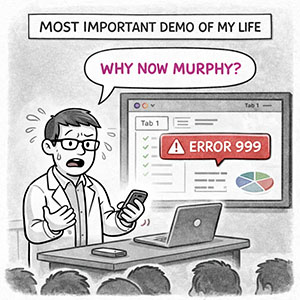
| "Nothing can possibly go wrong." |
Failure scenarios are being ignored. |
Murphy's Law
|
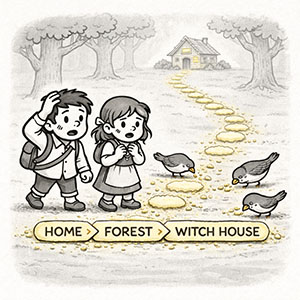
| "How did I get here?" |
Navigation context is missing. |
Breadcrumbs
|
| "Let's talk about this other thing instead." |
Attention is being diverted from the real issue. |
Red Herring
|
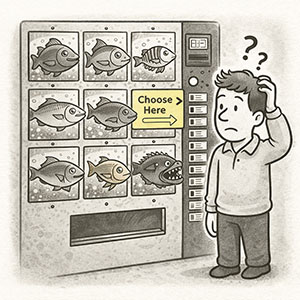
| "Wait… what does this do?" |
Users hesitate or backtrack from making a decision. |
Red Herring
|
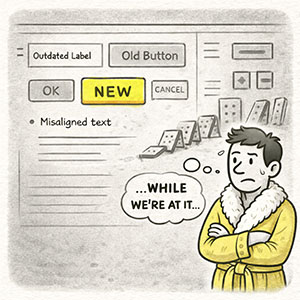
| "While we're at it..." |
One decision is triggering a chain reaction. |
Diderot Effect
|
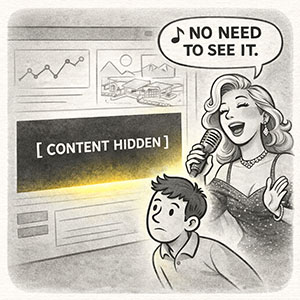
| "Users probably won't notice" |
Suppression is creating more attention. |
Streisand Effect
|
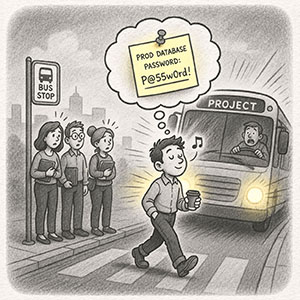
| "Only they know how this works" |
Critical knowledge is concentrated in one person. |
Bus Factor
|
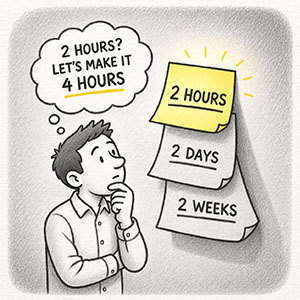
| "This should only take an hour." |
Complexity and uncertainty are being underestimated. |
Hofstadter's Law
|
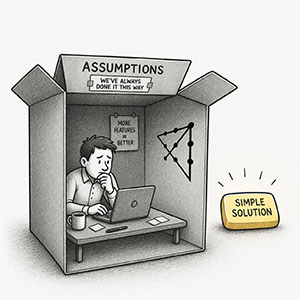
| "We have to do it this way" |
Existing assumptions need to be challenged. |
Thinking Outside the Box
|
| "We can't ship this" |
One issue blocks everything. |
Showstopper
|
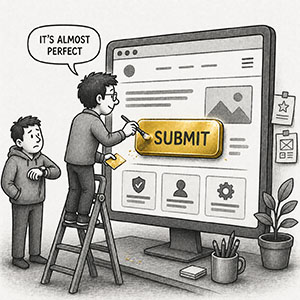
| "It's almost perfect" |
Effort is being spent beyond what's necessary. |
Gold Plating
|